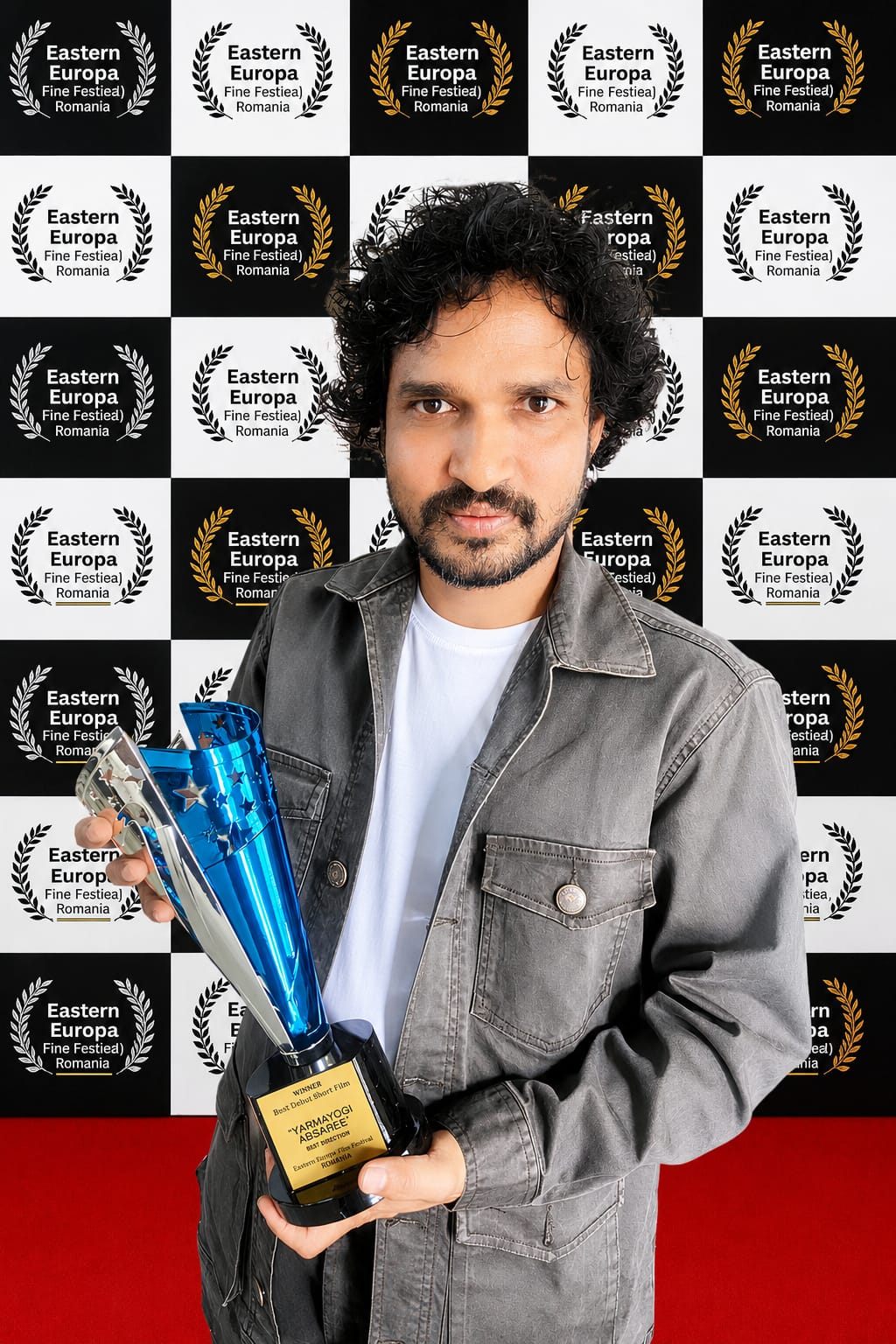
Early Life and Family
Rakesh Naorem was born on 6 March 1985 in Tentha Khongbal, a village in the Thoubal District of Manipur, a state in Northeast India renowned for its rich cultural heritage and natural beauty. Growing up in a family deeply rooted in traditional Manipuri values, he was exposed to the oral traditions, folk tales, and performing arts that form the backbone of the region's identity. His father, Naorem Chaoba Singh, instilled in him a sense of discipline and integrity, while his mother, Late Naorem Ongbi Borni Devi, nurtured his creative instincts with love and compassion. The loss of his mother at a young age left a profound impact on him, shaping his empathetic worldview and driving his passion for storytelling as a means of preserving memories and emotions.
Rakesh's upbringing in Tentha Khongbal was marked by a close-knit community where festivals, rituals, and everyday life were interwoven with artistic expression. He spent his childhood listening to elders narrate ancient legends and historical accounts of Manipur, which ignited his imagination and sowed the seeds for his future literary and cinematic pursuits.
In his early twenties, Rakesh met Naorem Romila, a woman who shared his values and aspirations. They married in a traditional Manipuri ceremony, and together they have two daughters, Naorem Sinthoi and Naorem Athoibi, whom he describes as his greatest inspirations. The family resides in Manipur, where Rakesh continues to balance his professional endeavors with his responsibilities as a husband and father. His personal experiences of love, loss, and resilience are often reflected in the deep emotional currents of his works, whether in poetry, plays, or films.
A Literary Journey Rooted in Culture
Rakesh Naorem's literary career began in 2004 with the publication of his first short story collection, Washaktugi Cheina, which immediately established him as a fresh voice in Manipuri literature. The book explored the complexities of human relationships against the backdrop of Manipur's changing social landscape, drawing praise for its lyrical prose and authentic portrayal of local life. Over the next decade, he expanded his repertoire to include drama, biography, and travel writing, each genre allowing him to document and celebrate different facets of Manipuri culture.
His 2008 drama Ekhenglakta Kangleipak is a powerful critique of contemporary political and social issues, using allegory and symbolism to address themes of identity, conflict, and hope. The play was widely performed in Manipur and beyond, earning acclaim for its bold narrative and theatrical innovation. In 2009, Rakesh published Inamma, a radio play that showcased his ability to craft intimate stories for an auditory medium, blending dialogue, soundscapes, and emotional depth.
One of his most significant literary contributions is the biography The Shining Star, written in 2009 about Padma Shri awardee Laishram Nabakishwar. This work not only honors a legendary figure in Manipuri culture but also serves as a historical document, detailing the struggles and achievements of a man who dedicated his life to the arts. Rakesh's meticulous research and heartfelt narrative style make the biography an essential resource for understanding Manipur's cultural renaissance.
Travel writing has also been a major part of his oeuvre. In Ningshinglubada Tripuragi Khongchat (2011) and its English translation Reminiscence: My Tripura Journey (2013), he chronicles his travels through the neighboring state of Tripura, describing its landscapes, people, and traditions with a keen eye for detail. These travelogues are not mere descriptions but philosophical reflections on the interconnectedness of cultures in Northeast India. His works have been invited to literary festivals organized by the Sahitya Akademi, India's national academy of letters, where he has shared his insights on preserving indigenous languages and storytelling traditions.
Rakesh's writing is characterized by its deep respect for Manipuri language and its ability to resonate with universal human experiences. He believes that literature should serve as a bridge between generations, passing down wisdom and values. His poetry, often published in literary journals, explores themes of nature, spirituality, and social justice. As a playwright, he has experimented with both traditional and modern forms, ensuring that Manipuri drama remains relevant and dynamic.
Beyond his own writing, Rakesh is the editor and publisher of Ipak, a monthly cultural journal that features articles, poems, stories, and historical essays in Manipuri. The journal has become a vital platform for emerging writers and scholars, fostering a sense of community among those dedicated to cultural preservation. Under his leadership, Ipak has expanded its readership and influence, organizing workshops and competitions to encourage young talent.
Excellence in Cinema
Rakesh Naorem's transition from literature to cinema was a natural progression, driven by his desire to reach wider audiences and explore visual storytelling. He began his film career as a producer, recognizing the power of the medium to document and disseminate cultural narratives. His production house has been responsible for several documentaries that highlight social issues, such as Padmashri Laishram Nabakishire: Kathokpagi Shaklon, a tribute to the life of the aforementioned artist, and Tollabasingi Tollen, which addresses the challenges faced by marginalized communities in Manipur.
Other notable productions include Sageigi Sanarei, a film about traditional Manipur textiles, Numit Mana Tadringei, which explores the impact of modernization on rural livelihoods, and Shakhenbi Iteina, a story of female empowerment set against the backdrop of political unrest. Phongdoknadringei and Eegi Khongul delve into interpersonal relationships and moral dilemmas, while Leiyisigi Wangmada is a poetic meditation on nature and spirituality. Bangladeshki Sana Tampha examines cross-border cultural ties between Manipur and Bangladesh, highlighting shared histories and traditions.
As a director, Rakesh has demonstrated exceptional skill in crafting short films that pack emotional and intellectual punches. His 2016 short Lingjel (The Curtain) is a poignant tale of a daughter's relationship with her aging mother, subtly addressing issues of memory and loss. The film won awards at several regional festivals and was praised for its sensitive direction and nuanced performances. In 2019, he released Use Me, a thought-provoking commentary on the exploitation of artists in the commercial film industry, which resonated deeply with independent filmmakers. Lupa 20 (2020) is a stark depiction of the economic struggles faced by the working class during the pandemic, shot with minimal resources yet achieving maximum impact.
His most ambitious project to date is the feature film Yahouthengba Khoimu (Blossom of Love), which marks his debut as a feature film director. Set in contemporary Manipur, the film weaves a love story with social commentary, exploring themes of identity, tradition, and change. Filming faced numerous challenges, including budget constraints and logistical hurdles typical of independent cinema in Northeast India, but Rakesh's perseverance saw the project through to completion. The film is expected to premiere at major film festivals and has already generated buzz for its authentic storytelling and visual splendor.
Rakesh's cinematic style draws from both classical Manipuri theatre and global film movements. He often uses long takes, natural lighting, and authentic dialects to create an immersive experience. His films prioritize character development over action, relying on subtle gestures and dialogues to convey emotions. He is also a proponent of using film as a tool for social change, addressing issues such as gender inequality, environmental degradation, and the preservation of indigenous knowledge.
Others my Short Film (As a Director)
1. Thounagi Nongju (5mins)
2. Ngak Youna Phumkhre (5 minutes)
3. Nom Nom Sagai Tong (14.25mins)
Thounagi Nongju won the Best Short Film Award in 1st DPF Short Film Competition 2025 Including 1 Lacs Cash Award, Best Director Award and Best Editor Award.
Rakesh Naorem's Dabut Feature Film "Yahouthengba Khoimu" and above 3 Short films produced by Dr. RK NAYANSANA DEVI
Rakesh Naorem's Directed Music Video
1. "Ima Nangbu Nungshibi" ( Patriotic) Produced by: Dr. RK Nayansana Devi
2. "Lakuko Toina" (Romance) Produced by Dr. RK Nayansana Devi
3. "Loktak Imana" (Folk Song) Produced by Dr. RK Nayansana Devi
4. "Tamhourabi Kwatha" (Patriotic) Produced by Karam Ongbi Kunjani
A Champion of Culture and Humanity
Rakesh Naorem's contributions extend far beyond the realms of literature and cinema. He is a committed humanitarian and social activist, actively involved in community development projects across Manipur. He has organized relief efforts during natural disasters, such as floods and landslides, providing food, shelter, and medical aid to affected families. During the COVID-19 pandemic, he mobilized resources to distribute masks, sanitizers, and rations to vulnerable populations, while also using his platform to raise awareness about health protocols.
His cultural activism is equally impressive. Rakesh has worked tirelessly to revive endangered art forms, such as traditional Manipuri dances, folk music, and handloom weaving. He has conducted workshops in schools and colleges, encouraging young people to learn their heritage. Through the journal Ipak, he has documented oral histories and rituals that might otherwise have been lost. He also collaborates with other cultural organizations to organize festivals, exhibitions, and seminars that bring together artists from different communities.
One of his most significant initiatives is the mentoring of aspiring writers and filmmakers. He regularly offers guidance to newcomers, helping them refine their craft and navigate the industry. Many young artists credit Rakesh with providing them with opportunities and platforms to showcase their work. His home often serves as a creative hub where discussions about art, culture, and society take place late into the night.
Rakesh is also a vocal advocate for the rights of indigenous peoples and the preservation of Manipuri identity. He has spoken at national and international conferences about the challenges facing Northeast India, including issues of representation, economic marginalization, and cultural erosion. His articles in Ipak and other publications call for policies that protect linguistic and cultural diversity.
Awards and Recognition
Rakesh Naorem's relentless pursuit of excellence has garnered him numerous accolades. He has received awards from the Sahitya Akademi for his contributions to literature, as well as honors from film festivals for his directorial works. The Manipur government has recognized his efforts in cultural preservation, and he has been invited to serve on juries for literary and film competitions. International organizations have also commended his humanitarian work, further cementing his reputation as a global cultural ambassador.
While the prompt does not list specific titles of awards, it is clear that his recognition reflects a lifetime of dedication. These honors serve not only as personal achievements but also as validations of the importance of Manipuri culture on the world stage.
Awards / Honors:
(i) Dr. BR Ambedkar National Award 2003
by: Bharatiya Dalit Sahitya Akademy, New Delhi
(ii) Best Coach Award (Cricket) 2006
by: Mongyangbam Flying Eagle Cricket Association, Kabowakching, Bishnupur District, Manipur
(iii) Best Manager & Coach Award (Cricket) 2006
by: Boys Cricket Team, Nambol, Bishnupur District, Manipur
(iv) Certificate of Appreciation 2007
by: National Alliance for Peoples Movements (NAPM), Uttar Pradesh
(v) Person of the Year 2009
by: Geographical Society of Tentha
(vi) Humanity Achiever Award 2018
by: ARK Foundation, New Delhi
(vii) Nongpok Ningthou Distinguished Service Cash Award 2018
by: Panthoibi Cultural Research Centre for Performing Arts (PACRECPA Society), Langdum, Imphal East, Manipur
(viii) Bir Tikendrajit National Youth Award 2019
by: Assam Pradesh Manipuri Association, Hojai, Assam
(ix) Humanitarian Excellence Award 2020
by: I Can Foundation, Jaipur
(x) Indo-Bangla International Friendship Award-2021
by: World Book of Star Records at West Bengal
(xi) Budding Filmmaker of India 2021
by: G-Town Society, Goa
(xii) Dr. B. R. International Award 2021
by: Dalit Sahitya Academy, Nepal
(xiii) South Asian Regional Brilliance Award-2022
by: World Book of Star Records at Nepal
(xiv) Northeast Regional Award-2022
by: The Northeast Biography Forum (NEBT)
(xv) Best Social Activist & Philanthropist Award-2024
by: Manipuri Literary & Cultural Forum, Tripura
(xvi) Inat Ponjeng Khutheiba-2025
by: Palem Panthou Cultural Trust, Manipur
Date: 30th July, 2026
(RAKESH NAOREM)
Personal Interests
An avid traveler, Rakesh believes that exploring new places expands one's horizons and deepens empathy. He has traveled extensively within India and to neighboring countries, documenting his journeys through writing and photography. His travelogues are not mere records but philosophical musings on the interconnectedness of humanity. He enjoys meeting people from diverse backgrounds and learning about their traditions, often incorporating these experiences into his stories.
In his downtime, Rakesh enjoys reading classic literature, listening to Manipuri folk music, and spending time with his family. He is an advocate for a simple, sustainable lifestyle, practicing organic farming in his small garden. Meditation and yoga are part of his daily routine, helping him maintain balance amidst a busy schedule.
Vision for the Future
Looking ahead, Rakesh Naorem plans to continue producing literature and films that resonate with global audiences while staying true to his roots. He aims to establish a cultural center in Manipur that would serve as a hub for artistic collaboration, education, and preservation. He also dreams of setting up a film festival that highlights the works of filmmakers from Northeast India, providing them with a platform to reach international markets.
He is currently working on a novel that delves into the history of Manipur during the colonial period, as well as a documentary series about the region's biodiversity. He hopes to collaborate with artists from other parts of India and abroad, fostering cross-cultural exchanges that enrich everyone involved. His ultimate goal is to ensure that future generations inherit a vibrant, living culture that they can be proud of.
Legacy
Rakesh Naorem stands as a towering figure in the cultural landscape of Manipur and India. His life's work demonstrates that art and activism are not separate but intertwined forces for good. By preserving and promoting Manipuri heritage, he has given a voice to his community and inspired countless others to embrace their identities. His legacy will continue to shape the artistic and social fabric of the region for decades to come.
In an era of rapid globalization and homogenization, Rakesh's commitment to authenticity and compassion serves as a beacon. He proves that one person's passion can ignite a movement, and that storytelling—whether through words or images—has the power to heal, unite, and transform. Rakesh Naorem is not just a writer or filmmaker; he is a cultural visionary whose light will shine for generations.