WORLD HUMAN RIGHTS ORGANIZATION (WHRO)
Human Rights • Human Dignity • Equality • Justice • Peace • Inclusion
Advancing fundamental freedoms, human dignity and social justice for underserved communities in India and around the world
“Human Rights, Human Dignity, Equality and Justice for All.”
Introduction
World Human Rights Organization, widely known as WHRO, is an autonomous, voluntary, non-governmental, non-partisan and non-profit organisation committed to promoting and protecting human rights, human dignity, equality, justice and social inclusion.
Established in 2021, WHRO is headquartered at MR-1, AltF Statesman House – 5th Floor, Wing-A, Statesman House, Barakhamba Road, New Delhi – 110001, India.
Under the chairmanship of Yograj Sharma, the organisation works to strengthen human-rights awareness, legal literacy, social responsibility and access to appropriate institutional remedies. Its activities are particularly focused on underserved, vulnerable and marginalised communities.
WHRO seeks to contribute to an inclusive society where every person—irrespective of nationality, religion, race, caste, gender, language, economic position, social background, political opinion or any other status—can live with dignity and enjoy fundamental rights and freedoms.
The organisation’s guiding philosophy, “Vishav Ka Kalyan Ho—The World Is One Family,” represents its commitment to human solidarity, peaceful coexistence and collective responsibility.
Quick Profile
| Particular | Details |
|---|---|
| Official Name | World Human Rights Organization |
| Acronym | WHRO |
| Established | 2021 |
| Organisation Type | Non-Governmental Organisation |
| Organisational Character | Autonomous, voluntary, non-partisan and non-profit |
| Chairman | Yograj Sharma |
| Headquarters | MR-1, AltF Statesman House – 5th Floor, Wing-A, Statesman House, Barakhamba Road, New Delhi – 110001, India |
| Areas of Engagement | Human Rights, Legal Awareness, Advocacy, Research and Community Empowerment |
| Primary Beneficiaries | Underserved, vulnerable and marginalised communities |
| Geographical Orientation | India and international human-rights engagement |
| Guiding Philosophy | Vishav Ka Kalyan Ho—The World Is One Family |
| Institutional Message | Human Rights, Human Dignity, Equality and Justice for All |
| Official Website | www.whro.in |
History and Establishment
The World Human Rights Organization was established in 2021 with the objective of promoting greater awareness and understanding of human rights among citizens in India and internationally.
The organisation emerged from the recognition that the legal existence of rights does not automatically ensure that people understand or exercise them. Many individuals remain unaware of their constitutional protections, available legal remedies and the institutions responsible for addressing rights-related concerns.
WHRO was therefore developed as an awareness, advocacy and engagement platform capable of connecting citizens and communities with legal professionals, researchers, academics, human-rights advocates, social workers and relevant institutions.
Its development reflects the belief that protecting human rights requires not only responses to individual violations but also education, prevention, legal literacy, public participation, institutional accountability and sustainable social development.
Vision
WHRO envisions:
“A world founded on dignity, equality, freedom, justice and respect for human rights.”
The organisation seeks to help build an inclusive society in which every person can exercise fundamental rights and participate meaningfully in social, economic, cultural and civic life.
Its vision includes the development of communities where:
-
Human dignity is universally respected.
-
Equality and non-discrimination are promoted.
-
Fundamental rights and freedoms are protected.
-
Access to justice is strengthened.
-
Vulnerable communities receive awareness and support.
-
Citizens understand their constitutional and human rights.
-
Rights-related concerns are addressed through lawful mechanisms.
-
Public institutions operate with responsibility and accountability.
-
Communities participate in building peaceful and inclusive societies.
-
Social development follows a rights-based approach.
Mission
The mission of the World Human Rights Organization is to promote human-rights awareness, strengthen rights-based approaches and encourage social responsibility through:
-
Human-rights education
-
Legal and constitutional awareness
-
Research and responsible advocacy
-
Capacity-building programmes
-
Community engagement
-
Public-awareness campaigns
-
Institutional cooperation
-
Leadership development
-
Social inclusion
-
Community empowerment
-
Access-to-justice awareness
-
International knowledge exchange
WHRO seeks to serve as a bridge connecting citizens and communities with experts, institutions and appropriate authorities.
The organisation places particular emphasis on disadvantaged communities that may have limited access to reliable information, legal awareness and institutional assistance.
Foundational Philosophy
Vishav Ka Kalyan Ho—The World Is One Family
The philosophy “Vishav Ka Kalyan Ho” represents the humanitarian foundation of WHRO.
It expresses the belief that human welfare cannot be divided by geographical boundaries, social identities or economic categories. Every individual is part of a shared human family and is entitled to dignity, freedom, equality and fair consideration.
This philosophy encourages:
-
Universal respect for human life
-
Compassion across social divisions
-
Cooperation among communities
-
Peaceful coexistence
-
Protection of vulnerable individuals
-
Rejection of discrimination
-
Collective social responsibility
-
Service to humanity
For WHRO, human-rights protection represents both a legal responsibility and a shared moral commitment.
Core Principles
Human Dignity
Every human being possesses inherent dignity and deserves respect, safety and equal consideration.
Equality
Every individual should have an equal opportunity to exercise fundamental rights and freedoms.
Non-Discrimination
Human rights should be respected irrespective of race, colour, caste, gender, language, religion, nationality, social origin, political opinion, disability, financial status or any other identity.
Justice
Every person should have access to fair procedures, appropriate remedies and competent legal institutions.
Rule of Law
Human rights must be protected through constitutional, statutory and institutional mechanisms.
Accountability
Individuals and institutions should remain accountable for actions that violate legally recognised rights.
Participation
People should have meaningful opportunities to participate in decisions affecting their lives and communities.
Inclusion
Particular attention should be given to underserved, vulnerable and marginalised populations.
Peace
Respect for dignity, constructive dialogue and justice is essential for building sustainable peace.
Human Solidarity
Individuals, communities and institutions share a responsibility to support human welfare and address injustice.
Human Rights and International Principles
WHRO’s awareness and advocacy orientation encompasses civil, political, economic, social and cultural rights.
The Universal Declaration of Human Rights, adopted by the United Nations General Assembly on 10 December 1948, provides a universal framework for fundamental rights and freedoms.
Together with the International Covenant on Civil and Political Rights and the International Covenant on Economic, Social and Cultural Rights, it forms the foundation commonly referred to as the International Bill of Human Rights.
WHRO supports the broader principles of international human-rights protection. This represents alignment with universal human-rights values and should not be interpreted as a claim of formal United Nations affiliation unless independently established.
Human Rights Promoted Through Awareness
WHRO’s educational and awareness framework addresses rights such as:
-
Right to life and personal liberty
-
Right to equality
-
Right to human dignity
-
Right to recognition before the law
-
Right to non-discrimination
-
Freedom from torture
-
Freedom from slavery and forced labour
-
Protection from arbitrary arrest and detention
-
Right to privacy
-
Freedom of thought, conscience and religion
-
Freedom of opinion and expression
-
Freedom of movement
-
Freedom of peaceful assembly and association
-
Right to nationality
-
Right to participate in government
-
Right to a fair trial
-
Presumption of innocence
-
Right to education
-
Right to health
-
Right to work
-
Right to fair wages and dignified working conditions
-
Right to adequate housing
-
Right to social security
-
Right to an adequate standard of living
-
Right to own property
-
Right to participate in cultural life
-
Rights of women
-
Rights of children
-
Rights of persons with disabilities
-
Rights and dignity of senior citizens
-
Protection from human trafficking
-
Access to justice
Five Institutional Pillars
1. Educate
Promoting knowledge of constitutional rights, international human-rights principles, legal safeguards and citizen responsibilities.
2. Empower
Strengthening the ability of individuals and communities to understand, exercise and defend their rights through lawful mechanisms.
3. Advocate
Encouraging responsible advocacy, public dialogue and research concerning human-rights protection and social justice.
4. Connect
Building connections among communities, legal professionals, researchers, institutions, civil-society organisations and relevant authorities.
5. Develop
Contributing to inclusive and sustainable development through equality, justice, opportunity and community participation.
Human-Rights Education
Human-rights education is one of WHRO’s principal areas of engagement.
The organisation seeks to help people understand:
-
Their constitutional rights
-
Internationally recognised human rights
-
Available legal protections
-
Responsibilities of citizens
-
Responsibilities of public institutions
-
Ways to recognise possible rights violations
-
Mechanisms for reporting violations
-
Appropriate institutions for seeking remedies
-
The importance of equality and non-discrimination
Education plays both preventive and empowering roles. When individuals understand their rights and responsibilities, they become better prepared to participate in public life and seek lawful remedies whenever required.
Legal and Constitutional Awareness
A considerable gap often exists between the availability of a legal right and public understanding of that right.
WHRO seeks to reduce this gap by promoting awareness of constitutional protections, legislation and institutional mechanisms.
Its legal-awareness orientation may help citizens understand the functions of:
-
Courts
-
Statutory commissions
-
Human-rights institutions
-
Administrative authorities
-
Police and law-enforcement bodies
-
Legal-aid institutions
-
Government welfare departments
-
Civil-society organisations
-
Other competent authorities
The organisation encourages people to address rights-related matters through appropriate, lawful and accountable procedures.
Research and Responsible Advocacy
WHRO recognises research and advocacy as essential components of human-rights work.
Its knowledge-oriented framework may involve participation from:
-
Legal professionals
-
Human-rights practitioners
-
Researchers
-
Academics
-
Think tanks
-
Social-development professionals
-
Community representatives
-
Civil-society organisations
-
Policy specialists
-
Media professionals
Research and responsible advocacy can support:
-
Identification of human-rights challenges
-
Evidence-informed public dialogue
-
Documentation of social concerns
-
Development of legal-literacy programmes
-
Institutional capacity building
-
Policy understanding
-
Rights-based solutions
-
Public awareness
-
Community empowerment
Access to Justice
Access to justice is fundamental to meaningful human-rights protection.
Rights cannot be fully realised if people do not know how to seek remedies or cannot access the institutions responsible for addressing violations.
Depending on the nature of a concern, available mechanisms may include:
-
Courts
-
Human-rights commissions
-
Women’s commissions
-
Child-rights institutions
-
Disability-rights bodies
-
Police authorities
-
Administrative authorities
-
Legal-services institutions
-
Government departments
-
Other competent statutory bodies
WHRO’s role is presented as awareness, advocacy and facilitation. Legal findings, decisions and remedies remain subject to the jurisdiction of the appropriate authorities.
Protection of Vulnerable Communities
WHRO places particular emphasis on communities experiencing social, economic, educational, legal or institutional disadvantages.
Its rights-based approach promotes:
-
Human dignity
-
Equal opportunity
-
Social inclusion
-
Legal awareness
-
Access to public services
-
Meaningful participation
-
Freedom from exploitation
-
Protection from discrimination
-
Access to justice
-
Sustainable empowerment
Rather than treating vulnerable people merely as recipients of charity, WHRO’s approach recognises them as equal rights-holders capable of participating in decisions that affect their lives.
Women’s Rights and Gender Equality
WHRO recognises gender equality as an essential component of human rights and sustainable social development.
Its awareness framework supports:
-
Equality before the law
-
Equal opportunities
-
Freedom from violence
-
Protection from exploitation
-
Access to education
-
Economic participation
-
Social and political participation
-
Dignity and bodily autonomy
-
Access to justice
-
Protection from trafficking
-
Safe working and living conditions
The objective is to promote women as equal participants and rights-holders in social, economic, cultural and public life.
Child Rights
Children require special protection because of their age and vulnerability.
WHRO’s human-rights framework encompasses:
-
Right to education
-
Right to identity
-
Right to health
-
Right to dignity
-
Protection from abuse
-
Protection from exploitation
-
Protection from trafficking
-
Protection from forced and hazardous labour
-
Protection from violence
-
Safe family and social environments
-
Age-appropriate participation
The organisation promotes awareness of the shared responsibility of families, communities, governments and institutions in protecting children.
Rights of Persons with Disabilities
WHRO promotes a rights-based and inclusive approach towards persons with disabilities.
Its principal considerations include:
-
Non-discrimination
-
Accessibility
-
Equal participation
-
Inclusive education
-
Employment opportunities
-
Social protection
-
Independent living
-
Human dignity
-
Access to public services
-
Equal access to justice
This approach moves beyond a purely charity-based model and recognises persons with disabilities as equal members of society with legally protected rights.
Senior Citizens and Human Dignity
Senior citizens may experience social isolation, financial insecurity, health-related difficulties, neglect and limited access to institutional support.
A rights-based approach towards senior citizens includes:
-
Dignity and respect
-
Access to healthcare
-
Social security
-
Protection from abuse
-
Participation in family and community life
-
Financial and legal awareness
-
Safe living conditions
-
Access to welfare services
WHRO’s social orientation recognises that age should never become a basis for discrimination or loss of dignity.
Community Empowerment
WHRO seeks to encourage communities to become informed and responsible participants in the protection of their rights.
Community empowerment can include:
-
Human-rights awareness
-
Legal literacy
-
Leadership development
-
Public dialogue
-
Social participation
-
Community-level advocacy
-
Awareness of government programmes
-
Knowledge of legal remedies
-
Institutional engagement
-
Responsible civic participation
The objective is not merely to provide information but to enable people to use that information constructively and lawfully.
Human Rights and the Rule of Law
WHRO places human rights within the broader framework of constitutional governance, accountability and the rule of law.
The rule of law requires that:
-
Laws apply equally.
-
Institutions operate within their legal authority.
-
Individuals receive fair procedures.
-
Rights violations can be challenged.
-
Public authorities remain accountable.
-
Remedies remain accessible.
-
Decisions are made without unlawful discrimination.
By promoting legal awareness, WHRO encourages citizens to understand both their rights and the lawful processes available for protecting them.
Human Rights and Sustainable Development
Human rights and sustainable development are closely connected.
A society cannot achieve genuinely inclusive development when sections of its population remain deprived of dignity, education, healthcare, housing, livelihood opportunities, equality or access to justice.
WHRO’s rights-based development approach can be expressed as:
Human Rights → Social Inclusion → Equal Opportunity → Access to Justice → Empowerment → Sustainable Development
This approach acknowledges that civil, political, economic, social and cultural rights are interconnected dimensions of human dignity.
International Cooperation
WHRO maintains an international human-rights orientation and states that it engages with partners in multiple countries.
Its international engagement may include:
-
Human-rights education
-
Knowledge exchange
-
Civil-society cooperation
-
Research collaboration
-
International awareness campaigns
-
Professional networking
-
Institutional partnerships
-
Policy dialogue
-
Promotion of universal human-rights principles
The organisation’s global outlook is based on the understanding that human rights are universal and that international cooperation can strengthen awareness and protection.
Partnerships and Stakeholder Engagement
Effective human-rights protection requires cooperation among multiple stakeholders.
WHRO’s institutional framework may engage with:
-
Civil-society organisations
-
Legal professionals
-
Academics
-
Researchers
-
Human-rights advocates
-
Community organisations
-
Public institutions
-
Social-development bodies
-
Policy experts
-
Media professionals
-
International partners
-
Responsible citizens and volunteers
These engagements can support research, awareness, capacity building, knowledge exchange and coordinated social action.
Public Awareness and Digital Outreach
WHRO undertakes public-facing awareness through educational content, campaigns, digital communication and community engagement.
Its digital initiatives seek to help people:
-
Understand their rights.
-
Recognise potential rights violations.
-
Identify appropriate legal remedies.
-
Understand institutional mechanisms.
-
Reject discrimination and exploitation.
-
Promote equality and dignity.
-
Participate responsibly in civic life.
-
Contribute to peaceful and inclusive communities.
WHRO uses its official website and social-media platforms to make human-rights information accessible to a wider audience across geographical boundaries.
Leadership
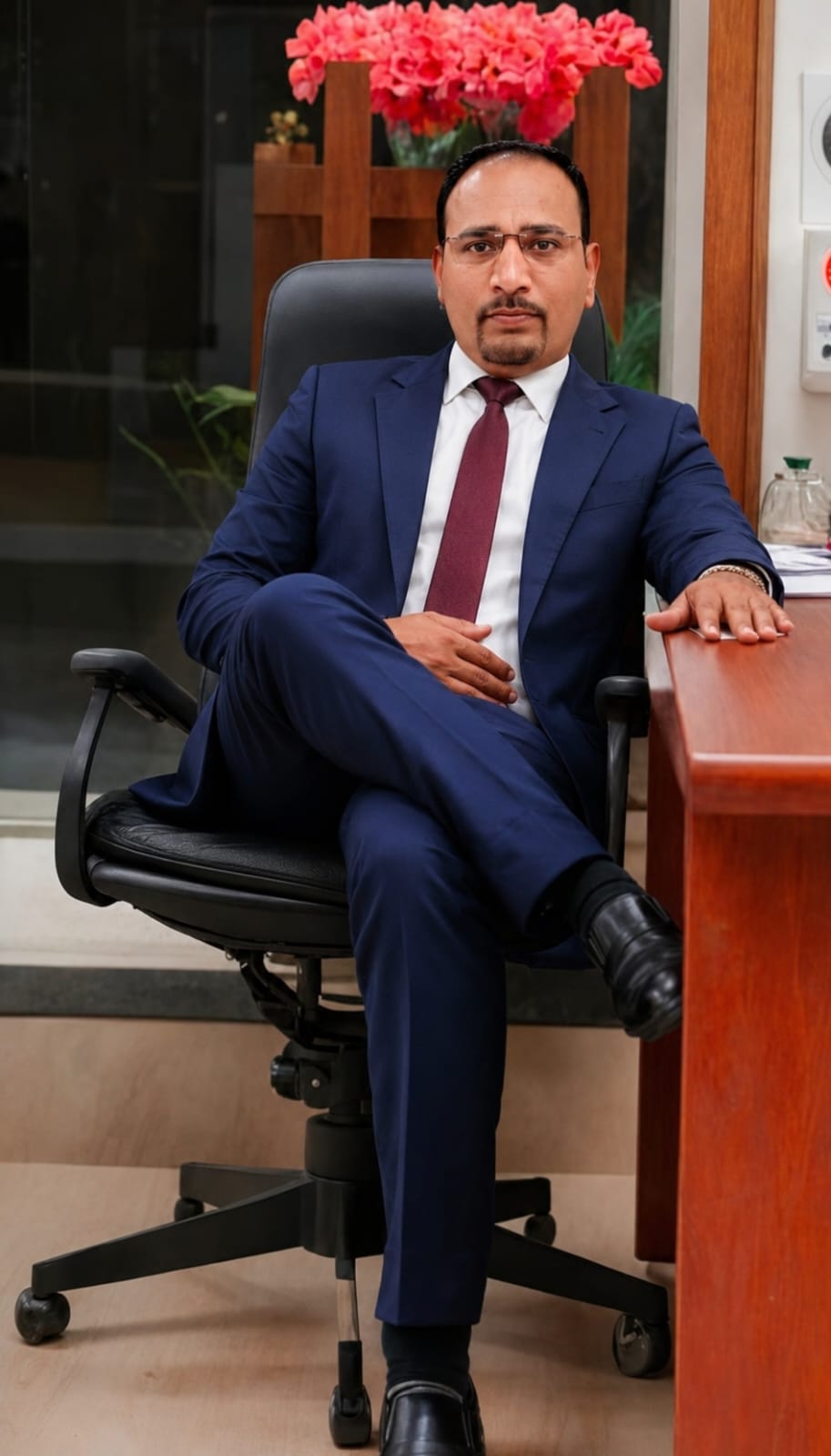
Yograj Sharma — Chairman
Yograj Sharma serves as the Chairman of the World Human Rights Organization (WHRO) and is also associated with the Journalist Today Network.
His leadership is connected with WHRO’s wider objectives of human-rights awareness, public education, institutional development and social responsibility.
Under his leadership, WHRO seeks to develop a network of responsible citizens, professionals, institutions and organisations committed to dignity, equality, justice, peace and humanitarian service.
Headquarters and Office Address
Yograj Sharma
Chairman, World Human Rights Organization (WHRO)
& Journalist Today Network
MR-1, AltF Statesman House – 5th Floor, Wing-A
Statesman House, Barakhamba Road
New Delhi – 110001, India
Institutional Message
The World Human Rights Organization seeks to contribute to a world in which:
Every individual is respected.
Every community is heard.
Every person understands their rights.
Every violation is addressed through appropriate mechanisms.
Every institution is encouraged to uphold accountability and the rule of law.
Every human being can live with dignity, equality, freedom and justice.
Organisational Identity
WORLD HUMAN RIGHTS ORGANIZATION
WHRO
Human Rights • Human Dignity • Equality • Justice • Peace • Inclusion
“Vishav Ka Kalyan Ho—The World Is One Family.”
Established in 2021 • Statesman House, Barakhamba Road, New Delhi – 110001, India • Global Human-Rights Orientation
Future Direction
WHRO’s future direction is centred on expanding awareness, strengthening institutional capacity and developing rights-based community engagement.
Its major priorities include:
-
Expanding human-rights education
-
Increasing legal-awareness programmes
-
Strengthening research and documentation
-
Building professional partnerships
-
Developing community leadership
-
Supporting gender equality
-
Promoting child-rights awareness
-
Encouraging disability inclusion
-
Increasing access-to-justice awareness
-
Developing multilingual educational resources
-
Expanding digital outreach
-
Strengthening international cooperation
-
Connecting communities with competent institutions
-
Promoting peaceful and inclusive development
Conclusion
World Human Rights Organization (WHRO) is an autonomous, voluntary, non-governmental, non-partisan and non-profit organisation working to promote human rights, human dignity, equality, justice and social inclusion.
Established in 2021 and headquartered at MR-1, AltF Statesman House – 5th Floor, Wing-A, Statesman House, Barakhamba Road, New Delhi – 110001, India, WHRO focuses particularly on underserved, vulnerable and marginalised communities.
Its institutional approach combines human-rights education, legal awareness, research, responsible advocacy, community empowerment, public engagement and institutional cooperation.
WHRO’s philosophy of “The World Is One Family” expresses the universal character of its mission. It recognises that human dignity should never be restricted by nationality, religion, social identity, economic status or geographical boundaries.
By promoting awareness of rights, lawful remedies, accountability and responsible public participation, WHRO seeks to contribute to a society in which every person can live with freedom, equality, security and dignity.
WORLD HUMAN RIGHTS ORGANIZATION — Human Rights, Human Dignity, Equality and Justice for All.
Official Website and Social Media
Album