Logo Text Logo

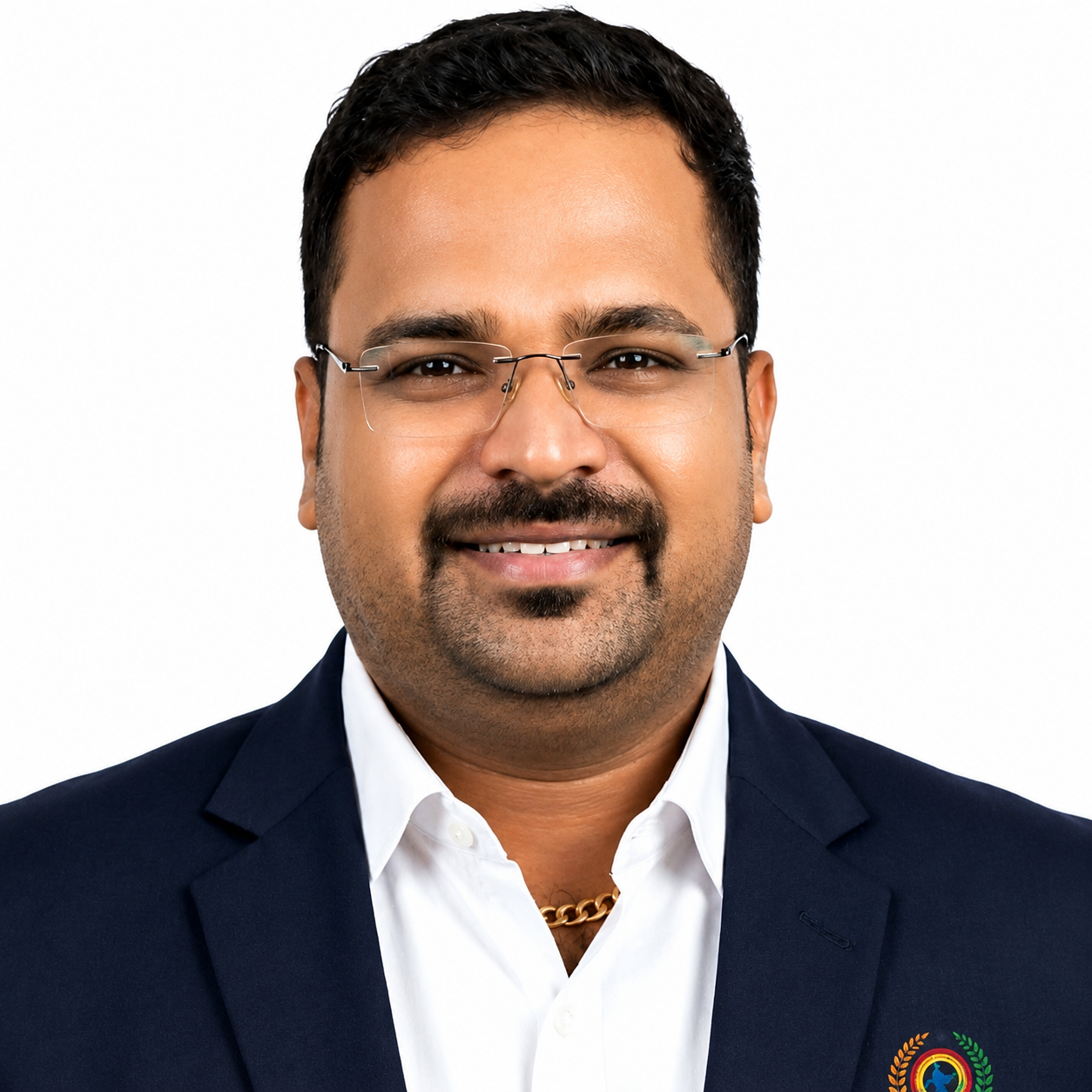
Bhaskar Dev Chatterjee

Article
Published by Wikiprofiles
Bhaskar Dev Chatterjee
Occupation Journalist, Editor-in-Chief, Human Rights Advocate, Environmentalist, Social Activist
Known for Owner and Editor-in-Chief of The Concrete News; District President of NHRCCB
Awards NHRCCB Special Award (2023)
Location Vapi, Gujarat, India
Nationality Indian
Career start 2012
Organization The Concrete News, NHRCCB
Title Editor-in-Chief of The Concrete News
Initiatives Annual tree-planting pledge (300+ trees)
Website यह रहा clickable website link — इस पर click करते ही site open हो Official Website](https://bhaskardevchatterjee.com/?utm_source=chatgpt.com)

BHASKAR DEV CHATTERJEE

Journalist | Editor-in-Chief | Human Rights Advocate | Environmentalist | Social Activist

“Where journalism becomes public responsibility, truth becomes action, and social awareness becomes a force for lasting change.”


Introduction

Bhaskar Dev Chatterjee is an Indian journalist, environmentalist, human rights advocate and social activist whose work brings together independent journalism, grassroots public engagement and environmental action. He is the Owner and Editor-in-Chief of The Concrete News, an independent digital news platform focused on public-interest reporting, investigative journalism and community awareness. He also serves as a District President of the National Human Rights & Crime Control Bureau (NHRCCB), according to his official profile. (Bhaskar Dev Chatterjee)

His professional identity extends beyond conventional reporting. Chatterjee's work is presented as an effort to connect journalism with civic action—highlighting public grievances, examining failures in infrastructure and governance, raising environmental concerns, and encouraging citizens to participate in the issues affecting their communities. His official portal describes his broader mission around truth, justice and sustainable development. (Bhaskar Dev Chatterjee)

What distinguishes his public profile is the combination of the pen of a journalist, the perspective of an environmental advocate and the field-oriented approach of a social activist.


A Journey Rooted in Public-Interest Journalism

Bhaskar Dev Chatterjee's official biographical timeline traces his journalism journey to 2012, when he began regional reporting focused on issues such as agriculture, water-management delays and the capacity of district-level healthcare facilities. This early phase placed local problems and everyday public concerns at the center of his reporting. (Bhaskar Dev Chatterjee)

Rather than viewing journalism solely as the reporting of events, his work gradually developed around a larger principle: public-interest journalism should identify problems, document them responsibly and create space for accountability.

This approach became central to his later work involving environmental campaigns, healthcare audits, civic infrastructure and community-led advocacy.


Founder & Editor-in-Chief of The Concrete News

A major milestone in Chatterjee's career came in 2015, when, according to his official timeline, he established The Concrete News to focus on issues that he believed were receiving insufficient attention from larger media channels. The platform describes itself as committed to independent and responsible journalism and public awareness. (Bhaskar Dev Chatterjee)

As its Owner and Editor-in-Chief, Chatterjee oversees an editorial identity centered on investigative reporting, civic issues, environmental questions and public-interest commentary. His website presents the publication as a platform that seeks to examine systemic shortcomings while bringing local and community-level concerns into wider public discussion. (Bhaskar Dev Chatterjee)

His editorial philosophy emphasizes independence from commercial or administrative pressure and places importance on reporting grounded in field realities. (Bhaskar Dev Chatterjee)

For Chatterjee, journalism is therefore not merely about publishing information—it is positioned as a tool for awareness, accountability and democratic participation.


Journalism with a Civic Purpose

A recurring theme across Bhaskar Dev Chatterjee's published work is the connection between media exposure and practical civic engagement.

His official portal states that he engages with grassroots communities on issues involving ecological damage, governance, public infrastructure and educational concerns. It also describes activities such as community meetings, environmental-impact assessments and representations to public authorities as part of his wider advocacy approach. (Bhaskar Dev Chatterjee)

This philosophy gives his journalism a distinctive public-service dimension.

Instead of considering the publication of an article to be the end of the process, his work reflects the idea that reporting can become the beginning of public discussion, administrative attention and community action.


Environmental Advocacy & Climate Action

Environmental conservation occupies an important place in Chatterjee's public work.

His official biography describes him as an environmental advocate committed to addressing climate change, pollution and ecological degradation. He has publicly pledged to plant at least 300 trees every year, presenting the initiative as part of a long-term commitment to environmental conservation and sustainable living. (Bhaskar Dev Chatterjee)

His environmental work also includes attention to larger structural concerns.

According to his website, in 2019 he carried out field assessments involving families affected by climate-related displacement in the Sunderbans and supported community representations concerning embankments and rehabilitation measures. (Bhaskar Dev Chatterjee)

His editorial portal has also featured reporting on rising sea levels, coastal communities and climate adaptation, demonstrating how environmental advocacy has become intertwined with his journalism. (Bhaskar Dev Chatterjee)


The Sunderbans & Climate Vulnerability

Among the environmental subjects highlighted prominently on his platform is the vulnerability of the Sunderbans.

His published editorial work has examined the effects of rising sea levels on coastal communities and the broader issue of climate migration. His official timeline further describes field assessments and community petitions connected with embankment infrastructure and rehabilitation. (Bhaskar Dev Chatterjee)

This focus illustrates a larger dimension of his environmental philosophy: climate change is not only an ecological issue, but also a question of human security, displacement, infrastructure and social justice.

For communities living in environmentally fragile regions, these issues often intersect, and Chatterjee's work attempts to bring that intersection into public discourse.


Campaign Against Industrial Pollution

Chatterjee's environmental activism has also addressed industrial pollution and waste disposal.

His official biographical timeline states that in 2022 he participated in a citizen-led campaign concerning alleged illegal chemical disposal in suburban water bodies, with the campaign seeking municipal scrutiny and review of industrial effluent practices. (Bhaskar Dev Chatterjee)

His publication has subsequently carried activism-focused material on industrial waste dumping and community demands for cleaner water bodies and stronger accountability. (Bhaskar Dev Chatterjee)

This area of work reflects his broader belief that environmental protection requires not only awareness but also citizen participation, institutional accountability and evidence-based public advocacy.


Human Rights Advocacy

Another important dimension of Bhaskar Dev Chatterjee's public profile is his involvement with human rights and social justice.

His official website identifies him as a District President of the National Human Rights & Crime Control Bureau (NHRCCB) and states that his responsibilities are connected with the protection of human rights, civil liberties and community welfare. (Bhaskar Dev Chatterjee)

In this role, his journalism and social activism intersect.

Public-interest journalism can expose grievances, while human-rights advocacy can help direct attention toward remedies, institutional responses and the protection of affected communities.

This combination has helped shape a professional identity that is broader than that of a newsroom-based journalist alone.


NHRCCB Special Award – 2023

According to his official profile, Bhaskar Dev Chatterjee was honoured with the NHRCCB Special Award at the International Conference on Human Rights in New Delhi in 2023. (Bhaskar Dev Chatterjee)

The recognition forms an important milestone in his public-service journey and is presented by his website as acknowledgement of his involvement in human-rights advocacy, journalism and social initiatives.

His website also maintains a section dedicated to certificates and professional recognitions connected with his journalism, environmental activities and human-rights work. (Bhaskar Dev Chatterjee)


Public Healthcare Accountability

Chatterjee's journalism has also focused on the condition of public healthcare infrastructure.

His official timeline states that in 2025 he conducted assessments involving twelve underfunded sub-district clinics, publishing findings through The Concrete News to draw attention to the need for improvements. (Bhaskar Dev Chatterjee)

His editorial archive additionally features reporting describing shortages of doctors, medicines and basic sanitation at primary healthcare facilities. (Bhaskar Dev Chatterjee)

The significance of this work lies in its emphasis on a fundamental question of governance: whether public institutions are delivering essential services effectively to the communities they are designed to serve.

Through such reporting, healthcare becomes not merely an administrative subject but an issue of public dignity, access and accountability.


Water, Infrastructure & Civic Accountability

Bhaskar Dev Chatterjee's reporting interests also extend to basic civic infrastructure.

His editorial archive includes material on drinking-water projects, incomplete pipelines and public infrastructure deficiencies, including an investigation described as examining contractor defaults across eight wards. (Bhaskar Dev Chatterjee)

By focusing on such subjects, his journalism highlights a category of issues that may appear local but directly influence the daily lives of citizens.

Clean water, healthcare, sanitation, environmental safety and functional public infrastructure are all closely connected to quality of life.

His work therefore reflects an editorial approach that gives importance to ground-level governance rather than limiting journalism to high-profile political events.


Defending Independent Journalism

Chatterjee has also written about the challenges facing independent journalism itself.

One of the editorial themes featured on his platform examines how algorithm-driven news distribution and corporate sponsorship can influence independent inquiry and the functioning of a free press. (Bhaskar Dev Chatterjee)

This concern connects with his stated philosophy of objective and independent journalism.

His official website describes an editorial approach intended to remain free from corporate bias, commercial algorithmic pressure and administrative direction. (Bhaskar Dev Chatterjee)

For Chatterjee, maintaining editorial independence is presented not simply as a professional preference, but as a necessary condition for journalism that seeks to serve the public.


From Reporting to Grassroots Action

Perhaps the most defining element of Bhaskar Dev Chatterjee's profile is his belief that meaningful journalism should not remain disconnected from society.

His website describes participation in community assemblies, public representations and grassroots advocacy, linking media coverage with administrative and civic processes. (Bhaskar Dev Chatterjee)

This creates a three-part model within his public work:

Investigate the issue. Inform the public. Encourage constructive action.

It is this connection between journalism and civic participation that gives his professional journey its distinctive character.


A Philosophy of Truth, Justice & Sustainability

Three ideas repeatedly appear across Chatterjee's official profile: truth, justice and sustainable development. (Bhaskar Dev Chatterjee)

Truth represents his commitment to journalism and fact-based public awareness.

Justice reflects his involvement in human-rights and community advocacy.

Sustainability connects his professional identity with environmental protection and climate consciousness.

Together, these principles create a coherent framework for his work across seemingly different areas—from investigative journalism and healthcare accountability to tree planting, pollution campaigns and human-rights advocacy.


Professional Presence

Bhaskar Dev Chatterjee maintains his professional editorial operations from Vapi, Gujarat, while his official contact profile also records family/residential roots in Hooghly district, West Bengal. (Bhaskar Dev Chatterjee)

This geographical connection between Gujarat and West Bengal adds another dimension to a professional journey that addresses both localized civic concerns and broader national themes involving journalism, environmental protection and human rights.


Vision for the Future

Bhaskar Dev Chatterjee's continuing vision can be understood as an effort to build a form of journalism that remains independent, socially conscious and closely connected to the realities experienced by ordinary citizens.

His work seeks to strengthen awareness around environmental vulnerability, public healthcare, civic infrastructure, pollution, human rights and institutional accountability.

At the same time, initiatives such as his annual tree-planting pledge reflect an attempt to combine public advocacy with individual responsibility. (Bhaskar Dev Chatterjee)

His larger ambition, as reflected throughout his official platform, is to contribute toward a society that is better informed, environmentally responsible and more responsive to public grievances.


Legacy in the Making

The professional journey of Bhaskar Dev Chatterjee represents the convergence of journalism, activism and public responsibility.

From regional reporting and the establishment of The Concrete News to environmental campaigns, human-rights advocacy, healthcare investigations and civic accountability initiatives, his profile reflects a belief that journalism can play a constructive role beyond simply recording events. (Bhaskar Dev Chatterjee)

His evolving body of work is ultimately built around a simple but powerful principle:

A journalist's responsibility is not only to give people information, but also to ensure that important public issues are seen, questioned and remembered.


Premium Profile Summary

Bhaskar Dev Chatterjee is an Indian journalist, environmentalist, social activist and human-rights advocate; the Owner and Editor-in-Chief of The Concrete News; and, according to his official biography, a District President of NHRCCB. His documented areas of work include investigative and public-interest journalism, environmental advocacy, climate-related issues in the Sunderbans, industrial-pollution campaigns, public-health accountability, civic infrastructure, grassroots advocacy and human-rights initiatives. His official profile also records the NHRCCB Special Award at the International Conference on Human Rights, New Delhi, in 2023 and his pledge to plant at least 300 trees annually. (Bhaskar Dev Chatterjee)

One-Line Profile

“Bhaskar Dev Chatterjee is an Indian journalist, editor, environmental advocate and social activist whose work connects independent journalism with human rights, grassroots accountability and sustainable development.”

I prepared this from the information published on his official website and deliberately did not invent DOB, education, family details or additional awards that the site does not clearly provide. Bhaskar Dev Chatterjee – Official Website

Appearance hide
Text
Width
Color
See also