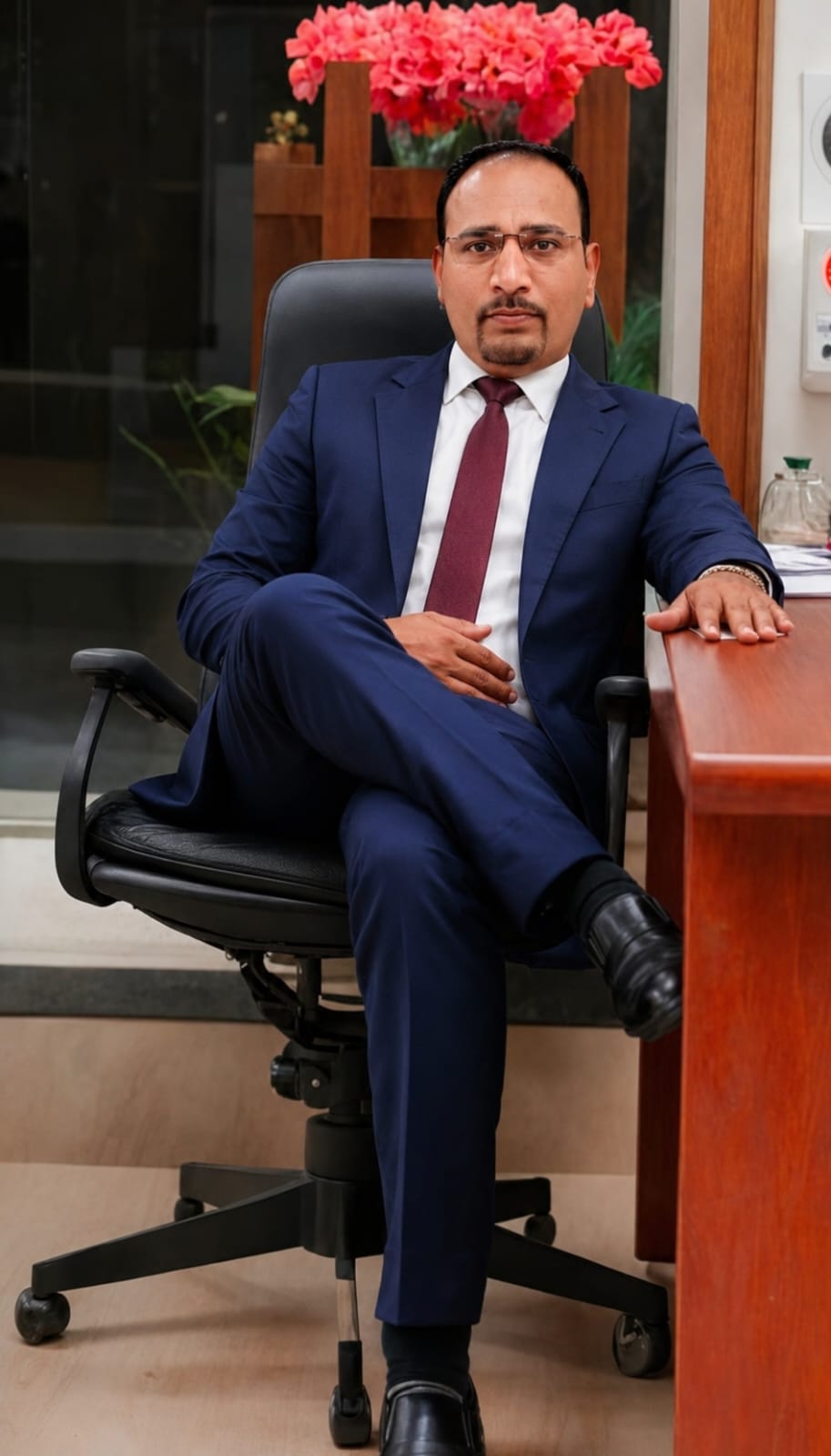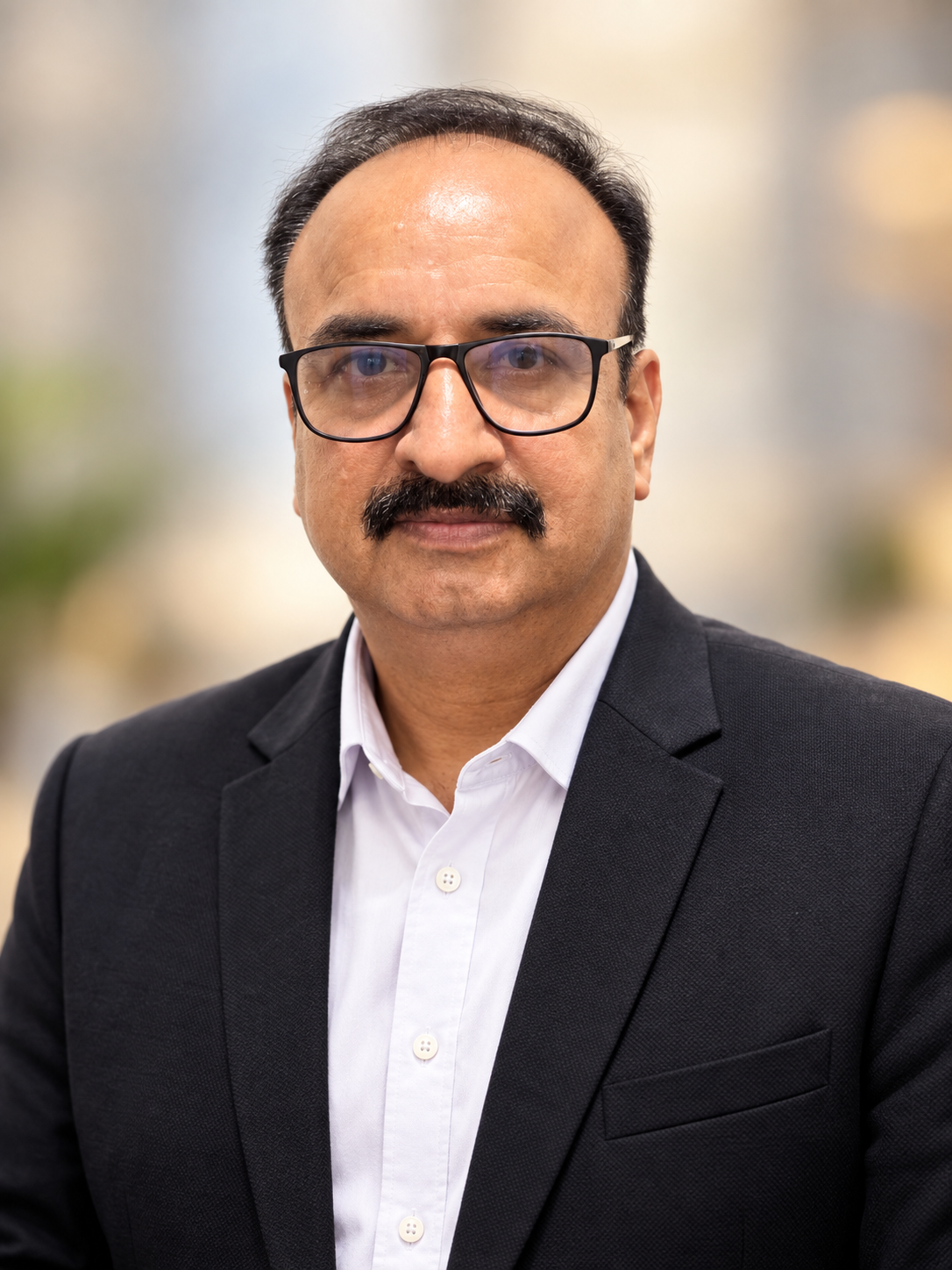
Shri Rakesh Kumar Sharma
Veteran Indian Railways Professional | Former Station Manager, New Delhi Railway Station | Passenger Service & Lost-and-Found Advocate | Social Service Professional
“I believe that true service is not limited by a job or designation—it is a lifelong commitment to helping others whenever they need it.”
— Shri Rakesh Kumar Sharma
Introduction
For Shri Rakesh Kumar Sharma, a career in the Indian Railways was never merely about trains, timetables, platforms, or operational responsibilities. Over approximately 36 years of railway service, his professional journey came to be closely associated with something deeply human: helping passengers when they found themselves in moments of uncertainty, distress, or loss.
Born on 27 January 1966 in Gurdaspur, Punjab, India, Rakesh Kumar Sharma built a long career in railway operations and station management, including service as Station Manager at New Delhi Railway Station (NDLS), one of the country’s major railway stations.
Alongside his official responsibilities, passenger facilitation became a defining element of his professional identity. According to the biographical information supplied for this profile, his efforts helped reconnect passengers with 1,986 lost belongings and extended assistance to 42 international travellers representing 18 countries.
These figures tell only part of the story. Behind every misplaced bag, document, electronic device, valuable item, or personal possession is a passenger facing anxiety and uncertainty. For Sharma, addressing such situations became an extension of public service—one in which efficiency needed to be accompanied by patience, responsibility, communication, and trust.
His contribution has been associated with numerous railway awards and other recognitions over the years, culminating among the listed railway honours in the Ati Vishisht Rail Seva Puraskar – 2023, attributed in the supplied record to the Ministry of Railways, Government of India.
Today, residing in Sector 78, Noida, Uttar Pradesh, his vision continues beyond designation or formal employment: to promote public service, strengthen passenger confidence, and contribute toward a more effective and passenger-friendly Lost & Found system within Indian Railways.
His philosophy can perhaps be captured most powerfully in one Hindi line associated with his story:
“अमानत एक यात्री की थी, भरोसा करोड़ों का लौटा।”
The belonging was one passenger’s; the trust restored belonged to millions.
Early Life and Education
Shri Rakesh Kumar Sharma was born on 27 January 1966 in Gurdaspur, Punjab.
His educational background combines academic study with knowledge relevant to transportation and railway management. He earned a Master of Arts (M.A.) in Public Administration and also completed a Diploma in Railway Transport & Management.
The combination is particularly relevant to the professional path he eventually pursued. Public administration concerns institutions, public systems, governance, organizational functioning, and service delivery, while railway transport and management provides specialized exposure to the operational environment of one of the world’s largest transportation networks.
Over the course of his career, these foundations were supplemented by decades of practical experience.
Railway stations—particularly major terminals such as New Delhi—are complex public environments. Operational requirements intersect constantly with passenger needs, security considerations, coordination between departments, unexpected disruptions, grievances, and time-sensitive decision-making.
It was within this demanding environment that Sharma developed his professional experience in railway operations, station management, passenger facilitation, problem-solving, public grievance handling, coordination, leadership, and Lost & Found passenger assistance.
Approximately 36 Years with Indian Railways
The central chapter of Rakesh Kumar Sharma’s professional life is his approximately 36 years of dedicated service with Indian Railways.
A railway career of this duration spans far more than routine administrative work. It means decades of working within an organization that serves enormous numbers of people and operates through a highly interconnected network of stations, trains, operational teams, technical personnel, commercial staff, security agencies, and passenger-facing services.
Throughout this journey, Sharma developed experience in both operational responsibility and public interaction.
His professional responsibilities required coordination, timely decisions, passenger communication, grievance resolution, and the ability to respond appropriately when unexpected situations emerged.
Over time, one area became particularly significant in his work: helping passengers recover lost belongings.
For many travellers, losing a possession during a railway journey can quickly become an overwhelming experience. Railway stations are crowded, journeys are time-sensitive, passengers may be unfamiliar with procedures, and valuable belongings can contain far more than their monetary worth.
A lost bag may contain identification documents.
A misplaced wallet may affect an entire journey.
A forgotten phone may hold years of personal information.
A document may be essential for travel or professional commitments.
In such circumstances, the person who helps recover an item is not simply returning property. He is helping restore a passenger’s sense of security and trust.
This human dimension became an important part of Sharma’s railway journey.
Station Manager at New Delhi Railway Station
Among the most prominent responsibilities in his career was his service as Station Manager at New Delhi Railway Station (NDLS).
New Delhi Railway Station is a major passenger terminal in the national capital, and station management in such an environment involves substantial operational and public-facing responsibilities.
A Station Manager must function at the intersection of systems and people.
There are scheduled operations to oversee, teams to coordinate, passenger concerns to address, disruptions to manage, and numerous situations requiring practical judgment.
Sharma’s work in this environment helped strengthen skills that would become central to his professional profile: coordination, leadership, passenger facilitation, grievance handling, problem-solving, and public service.
His approach to railway service appears especially reflected in his focus on individual passengers.
Large organizations naturally work through systems and procedures, but passengers experience those systems personally. For a traveller who has lost an important belonging, the effectiveness of the entire institution may be judged by how that one problem is handled.
Sharma’s Lost & Found work therefore became more than a peripheral responsibility. It represented a very direct form of passenger service.
1,986 Lost Belongings Reunited with Passengers
One of the most distinctive achievements attributed to Shri Rakesh Kumar Sharma is his role in helping reunite passengers with 1,986 lost belongings.
The number is notable, but its human significance is greater than the statistic itself.
Each recovery represents a separate passenger, family, journey, or personal story. Some belongings may be replaceable; others may carry documents, memories, or practical importance that cannot easily be measured financially.
Successful Lost & Found assistance can require observation, record-keeping, communication, verification, coordination with railway personnel, and careful handling to ensure that property reaches the legitimate owner.
It also requires persistence.
A passenger may already have left the station. Contact information may be incomplete. Ownership may need to be established. Different departments or personnel may need to coordinate.
For Sharma, solving such cases became closely connected to his belief in passenger trust.
The philosophy behind his work is expressed effectively by the phrase:
“अमानत एक यात्री की थी, भरोसा करोड़ों का लौटा।”
The thought captures a larger principle of public service: returning one passenger’s property may seem like a small act within an enormous railway system, but such experiences can influence how people perceive the institution as a whole.
Assisting International Travellers
The supplied professional record also credits Sharma with assisting 42 international travellers from 18 countries.
International passengers can face additional difficulties when something goes wrong during a journey. They may not understand local procedures, may encounter language or communication barriers, and may have limited time before onward travel.
The loss of a passport, document, baggage, mobile phone, or another essential possession can therefore become particularly stressful.
Assisting travellers from different countries requires more than operational knowledge. It calls for clear communication, patience, sensitivity, problem-solving, and an ability to build confidence quickly.
This aspect of Sharma’s service reflects the broader reach of passenger facilitation. At a major railway station in India’s national capital, public service often means interacting not only with passengers from different states and regions of India but also with visitors from around the world.
Passenger Trust as a Professional Philosophy
A recurring theme in Rakesh Kumar Sharma’s professional journey is trust.
Railway passengers depend upon a vast system every day. They trust schedules, infrastructure, employees, procedures, and institutions to help them complete their journeys.
That trust becomes particularly important when something goes wrong.
Sharma’s approach emphasizes that effective passenger service requires more than following a process mechanically. The person seeking assistance must feel that the concern has been heard and that someone is making a genuine effort to resolve it.
His professional philosophy therefore connects three principles:
Responsibility. Reliability. Humanity.
This philosophy is also reflected in his personal statement:
“I believe that true service is not limited by a job or designation—it is a lifelong commitment to helping others whenever they need it.”
The statement gives his career a continuity beyond retirement, title, or organizational hierarchy.
Vision for a Better Lost & Found System
After decades of railway experience, Sharma’s stated vision remains closely connected to passenger service and Lost & Found assistance.
He seeks to continue serving society, helping people, strengthening passenger trust, and contributing ideas toward a more effective and passenger-friendly Lost & Found system in Indian Railways.
Lost & Found may appear to be a narrow area of railway administration, but from the passenger’s perspective it can be extremely important.
A strong system needs clarity, traceability, communication, proper verification, coordination, and accessibility. Passengers should know whom to contact, what information to provide, and how the status of a lost belonging can be followed.
Sharma’s interest in finding innovative ways to assist railway passengers is therefore closely aligned with his decades of practical experience.
His long-term vision is not simply to celebrate previous recoveries, but to use experience as a foundation for improving passenger assistance.
Railway Awards and Honours
Over the course of his railway career, Shri Rakesh Kumar Sharma has been associated, according to the supplied biographical record, with multiple departmental and institutional awards.
His listed railway recognitions include DRM Awards – Northern Railway in 1995, 1998, 1999, 2005, 2007, 2010, 2012 and 2013.
Other listed railway honours include the COM/Northern Railway Award – 1999, Member Traffic / Railway Board Award – 2005, GM/Northern Railway Award – 2006, MOSR Award – 2007, Member (Staff), Railway Board Award – 2011, and AGM/Northern Railway Award – 2015.
The supplied record further lists the EXIM Award – 2022 in connection with Passenger Rail Operations / Passenger Facilitator in Rail Operation.
Among the most prominent recognitions in the material provided is the Ati Vishisht Rail Seva Puraskar – 2023, attributed to the Ministry of Railways, Government of India.
Together, these listed recognitions span different stages of a long railway career and reflect the sustained nature of the work described in his profile.
National, Social and Record Recognitions
Sharma’s supplied profile also lists recognitions extending beyond railway departmental awards.
These include the Samaj Rattan Award – 2024, NBT Prernadeep Award – 2025, Rashtriya Gaurav Samman – 2025, Martand Award – 2025, and Utkrisht Samaj Seva & Jankalyan Samman – 2026.
His record-related distinctions are listed as:
India Book of Records – Record Holder
and
Asia Book of Records – Grand Master
These recognitions form part of a profile increasingly associated not only with railway operations but also with passenger assistance and social service.
Life Beyond Professional Designation
Although Indian Railways forms the core of Sharma’s professional story, his interests extend beyond formal railway duties.
His hobbies and interests include helping people, social service, reading, travelling, and exploring innovative ways to assist railway passengers.
This combination reveals an important continuity between profession and personality. Passenger assistance was not treated simply as a workplace obligation; helping people remains part of his stated interests and future vision.
Reading allows a person to continue learning.
Travelling creates exposure to different people and environments.
Social service keeps an individual connected to community needs.
And innovation encourages established systems to evolve rather than remain static.
For Sharma, these interests converge around a consistent idea: knowledge and experience become more valuable when they are used to help others.
Family and Personal Life
Shri Rakesh Kumar Sharma is married and lives with his family. His present residence is in Sector 78, Noida, Uttar Pradesh, India.
Behind a career extending for approximately three and a half decades is also a personal journey involving family responsibilities and the balance required to sustain a long professional life.
While his public profile is defined primarily by railway service and passenger assistance, family remains an important part of his personal life.
A Legacy Built Around Service
Many professional careers can be summarized through designations, promotions, years of employment, and awards.
Rakesh Kumar Sharma’s story is better understood through another measure: people helped.
His approximately 36 years in Indian Railways provided the institutional setting, while his service as Station Manager at New Delhi Railway Station represented an important professional responsibility. His awards document recognition received at different stages.
Yet the figure of 1,986 lost belongings reunited with passengers gives the story its distinctive human character.
Likewise, assistance to 42 international travellers from 18 countries demonstrates how passenger service can cross geographical and cultural boundaries.
Every successful recovery is ultimately a moment between an institution and an individual.
A passenger arrives worried.
Someone listens.
A process begins.
An item is identified.
Ownership is established.
And when the belonging returns to its rightful owner, what comes back is often more than an object.
Confidence comes back.
Relief comes back.
And, in some measure, trust comes back.
That is why the phrase associated with Sharma’s journey carries such resonance:
“अमानत एक यात्री की थी, भरोसा करोड़ों का लौटा।”
Quick Profile
Full Name: Shri Rakesh Kumar Sharma
Date of Birth: 27 January 1966
Place of Birth: Gurdaspur, Punjab, India
Present Residence: Sector 78, Noida, Uttar Pradesh, India
Education: M.A. in Public Administration; Diploma in Railway Transport & Management
Profession: Veteran Indian Railways Professional
Notable Position: Station Manager, New Delhi Railway Station (NDLS)
Railway Service: Approximately 36 Years
Lost Belongings Reunited: 1,986
International Travellers Assisted: 42 travellers from 18 countries
Core Expertise: Railway Operations, Station Management, Passenger Facilitation, Problem Solving, Public Grievance Handling, Coordination, Leadership & Lost & Found Assistance
Interests: Social Service, Reading, Travelling, Helping People & Passenger-Service Innovation
Marital Status: Married
Present Vision: Contributing toward an effective and passenger-friendly Lost & Found system and continuing to serve society
Selected Awards & Recognition
The biographical information provided for this profile lists the following honours: DRM Awards, Northern Railway (1995, 1998, 1999, 2005, 2007, 2010, 2012 & 2013); COM/Northern Railway Award (1999); Member Traffic/Railway Board Award (2005); GM/Northern Railway Award (2006); MOSR Award (2007); Member (Staff), Railway Board Award (2011); AGM/Northern Railway Award (2015); EXIM Award (2022); Ati Vishisht Rail Seva Puraskar (2023); Samaj Rattan Award (2024); NBT Prernadeep Award (2025); Rashtriya Gaurav Samman (2025); Martand Award (2025); Utkrisht Samaj Seva & Jankalyan Samman (2026); India Book of Records – Record Holder; and Asia Book of Records – Grand Master.
Media & References
For readers who wish to explore available coverage and audiovisual material relating to Shri Rakesh Kumar Sharma, the following links were supplied for this profile:
-
YouTube: https://youtu.be/29_rVmJDctQ
-
OpenSearch: https://www.opensearch.co.in/36986/
-
Bright Business – “The Trust Belonged to a Traveler, the Trust of Crores Was Returned”: https://www.brightbusinesss.com/the-trust-belonged-to-a-traveler-the-trust-of-crores-was-returned/
-
YouTube: https://youtu.be/YYhPX4XZZ6I
-
Tehelka Hindi – supplied shared source: https://share.google/60h70iwIXN8I1RTdW
Personal Philosophy
“I believe that true service is not limited by a job or designation—it is a lifelong commitment to helping others whenever they need it.”
For Shri Rakesh Kumar Sharma, these words are an appropriate summary of a professional journey shaped by railway operations but remembered through passenger service.
From Gurdaspur, Punjab, to decades of service in Indian Railways and the responsibilities of New Delhi Railway Station, his journey demonstrates how a public-facing profession can acquire meaning through thousands of individual acts of assistance.
A railway may connect destinations.
A station may connect journeys.
But service connects people with institutions—and builds the trust on which those institutions ultimately depend.
For Rakesh Kumar Sharma, that trust remains the enduring purpose of the journey.