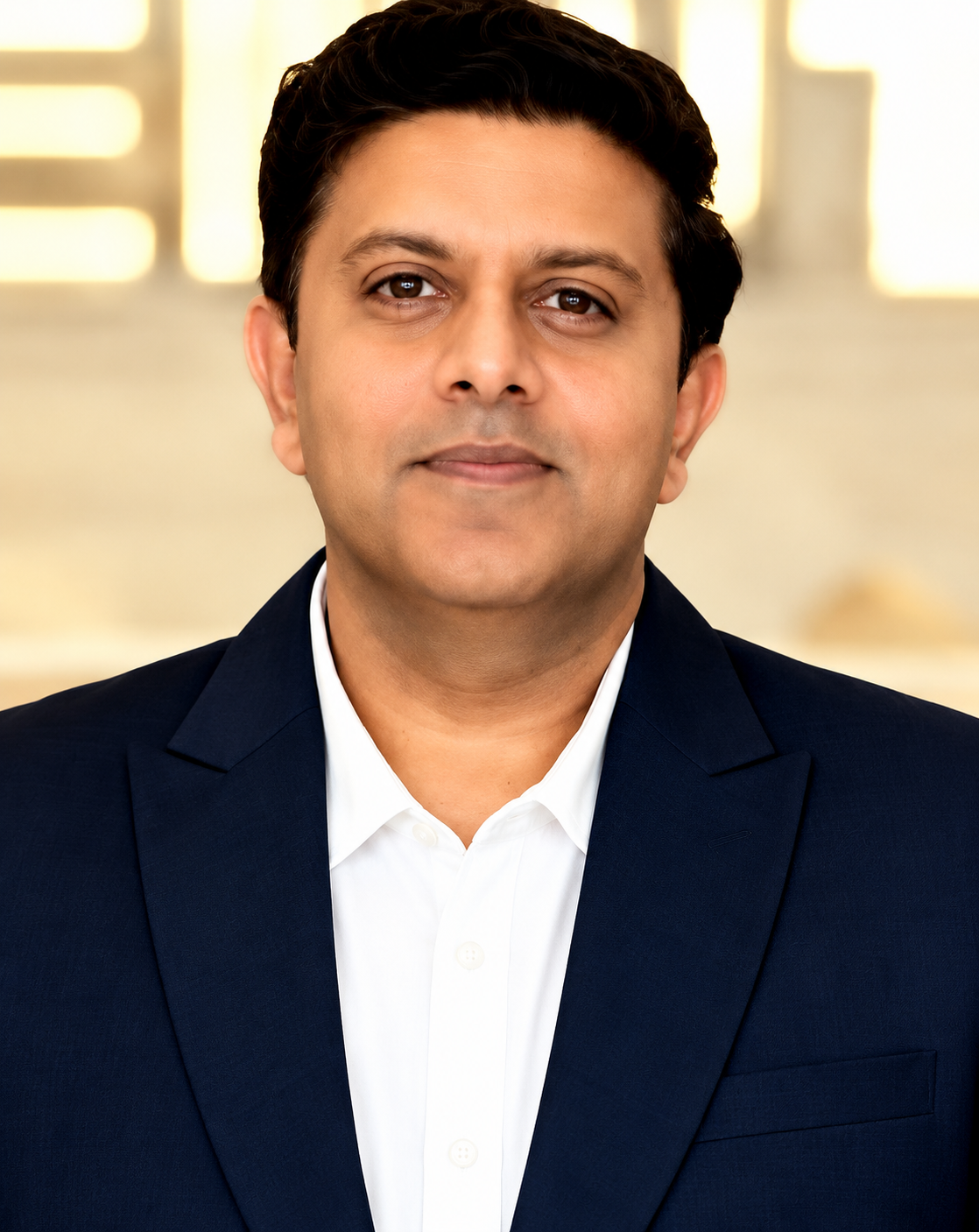
Shivam Tripathi
Chief Technology Officer | Government Technology Leader | Digital Transformation Strategist | Cybersecurity Professional | AI & Data Science Advocate | Startup Mentor | e-Governance Trainer | Sportsperson
Introduction
Shivam Tripathi is an Indian technology professional, government technology leader, mentor and sportsperson whose career has evolved at the intersection of technology, governance, innovation, cybersecurity, artificial intelligence and public service.
With professional experience spanning several decades across the private sector, consulting, academia and government, he has worked in diverse areas including enterprise technology, digital governance, cloud computing, cybersecurity, artificial intelligence, GIS, data analytics, software architecture, programme management and technology-led organisational transformation.
Over the course of his professional journey, Tripathi has progressed through technical, managerial and strategic leadership roles, eventually taking responsibility for large-scale technology initiatives within government.
He currently serves as Chief Technology Officer (CTO), Directorate of Urban Administration and Development, Government of Madhya Pradesh, where his professional focus includes technology strategy, digital transformation, enterprise architecture, cloud infrastructure, cybersecurity, GIS, artificial intelligence, data analytics and integrated technology systems for urban governance.
At the core of his professional philosophy is a simple but powerful idea:
Technology should not exist merely to automate systems; it should improve institutions, empower people, strengthen governance and create meaningful opportunities.
Early Life and Education
Shivam Tripathi was born on 26 September.
His academic and professional learning reflects a multidisciplinary combination of computer technology, management, data science and cybersecurity.
He holds a Master of Computer Applications (MCA) and a Master of Business Administration (MBA) and has also pursued advanced learning in Data Science.
His academic associations include the University of Mumbai and the Indian Institute of Management Bangalore (IIM Bangalore).
Alongside his formal academic background, Tripathi has continued to strengthen his professional capabilities through specialised learning in technology management, information security and cybersecurity.
His professional qualifications and certifications include:
-
ITIL
-
CISM
-
OSCP
This combination of technical education and managerial understanding has played an important role in shaping his approach to technology leadership.
Rather than treating technology purely as an engineering function, he approaches digital transformation as a combination of technology architecture, organisational processes, security, governance, people and long-term institutional objectives.
Professional Journey
Shivam Tripathi has built a career that spans multiple dimensions of the technology ecosystem.
His professional roles have included:
-
Database Administrator
-
Solution Architect
-
Engineering Manager
-
Program Manager
-
Assistant Vice President
-
Chief Technology Officer
This progression has given him experience from the foundational technical layers of information systems to executive-level technology strategy and governance.
His professional associations have included organisations and institutions such as:
-
IBM
-
CSC
-
Microsoft-related technology operations
-
Innodata
-
Ministry of Information Technology
-
Directorate of Urban Administration and Development, Government of Madhya Pradesh
Through these roles, he has gained experience in areas including:
-
Enterprise application architecture
-
Large-scale software systems
-
Technology programme management
-
Cloud infrastructure
-
Cybersecurity
-
Data analytics
-
Digital platforms
-
Enterprise modernisation
-
Technology strategy
-
Government digital transformation
His career reflects a gradual evolution from technology implementation to strategic leadership.
Government Technology Leadership
A defining phase of Shivam Tripathi's career has been his contribution to technology-enabled governance.
He has been associated with the conceptualisation, development and implementation of technology systems supporting government institutions and public administration.
His work has included initiatives related to:
-
Legislative proceeding management
-
State-level order and circular management
-
Court case management for the Advocate General's Office
-
Animal Husbandry technology systems
-
State-level digital platforms
-
Cloud and data analytics platforms
-
GIS-based urban management
-
Cybersecurity and secure digital infrastructure
-
Enterprise application modernisation
-
Digital citizen services
-
Integrated government platforms
Tripathi's approach to e-Governance goes beyond converting manual processes into digital formats.
For him, genuine digital transformation requires the redesign of the process itself.
His approach therefore places emphasis on:
Process Re-engineering
System Integration
Automation
Data-Driven Decision-Making
Cybersecurity
Scalability
Citizen-Centric Service Delivery
This philosophy reflects a broader understanding of digital governance in which technology becomes part of institutional transformation rather than functioning merely as a supporting tool.
Chief Technology Officer – Government of Madhya Pradesh
Shivam Tripathi currently serves as Chief Technology Officer, Directorate of Urban Administration and Development, Government of Madhya Pradesh.
His role places him at the intersection of public administration and rapidly evolving technologies.
His areas of professional responsibility and interest include:
-
Technology Strategy
-
Digital Transformation
-
Enterprise Architecture
-
Cloud Infrastructure
-
Cybersecurity
-
Geographic Information Systems
-
Artificial Intelligence
-
Data Analytics
-
Integrated Digital Platforms
-
Urban Technology Systems
-
Technology-enabled Governance
He has been associated with initiatives focused on strengthening technology infrastructure for urban local bodies and developing digital systems capable of supporting administration at scale.
Tripathi's work in urban technology reflects the understanding that future-ready governance cannot depend upon isolated software applications.
Instead, modern governance increasingly requires the integration of:
Government Processes + Data + GIS + Artificial Intelligence + Cloud Infrastructure + Cybersecurity
When these components function together, digital systems can become more intelligent, scalable and useful for public administration.
Digital Transformation Vision
One of the strongest themes running through Shivam Tripathi's professional journey is his approach to digital transformation.
For him, digital transformation is not equivalent to simply replacing paper with software.
True digital transformation requires institutions to rethink:
-
How information moves
-
How decisions are made
-
How departments collaborate
-
How citizens access services
-
How technology systems communicate
-
How data is secured
-
How performance is measured
His professional philosophy therefore emphasises building systems that are not only digital, but also integrated, secure, intelligent and scalable.
This approach represents a transition from traditional IT implementation toward technology-driven institutional transformation.
Artificial Intelligence and Emerging Technologies
Artificial Intelligence represents an important part of Shivam Tripathi's professional interest in emerging technologies.
He has advocated the adoption of emerging technology within government and institutional environments, particularly in areas such as:
-
Artificial Intelligence
-
Data Science
-
GIS
-
Cloud Computing
-
Cybersecurity
His interest lies particularly in converting emerging technologies into practical solutions.
Rather than viewing Artificial Intelligence solely as a technological trend, his focus is on understanding how AI can support:
-
Better decision-making
-
Data interpretation
-
Administrative efficiency
-
Intelligent digital platforms
-
Improved government processes
Tripathi's broader technology vision involves combining AI with structured data, GIS, cloud computing and secure digital infrastructure.
Cybersecurity and Secure Digital Infrastructure
Cybersecurity forms another major pillar of Shivam Tripathi's professional profile.
His interest in cybersecurity covers areas such as:
-
Secure application architecture
-
Information-security practices
-
Cloud security
-
Secure infrastructure
-
Technology governance
-
Cybersecurity awareness
He has also promoted the understanding that cybersecurity should not be treated as a separate or secondary technical function.
As institutions become increasingly dependent on technology, cybersecurity must become part of the overall architecture of digital governance.
Security, in this philosophy, should be designed into technology systems from the beginning rather than added later as an additional layer.
His cybersecurity credentials include CISM and OSCP, subject to verification through the relevant certification bodies.
GIS and Urban Technology
Geographic Information Systems are another important dimension of Tripathi's work.
He has been associated with initiatives involving GIS-based urban management.
GIS enables public institutions to connect administrative information with geographical information, helping build a more comprehensive understanding of urban environments.
Tripathi's approach is not to view GIS simply as a mapping system.
Instead, he sees greater value when GIS is integrated with:
-
Government databases
-
Digital platforms
-
Data analytics
-
Administrative processes
-
Decision-support systems
Such integration can transform spatial data into a practical tool for governance and planning.
Cloud Infrastructure
Cloud computing forms an important part of Shivam Tripathi's technology interests and government technology work.
As government systems become larger and more interconnected, they require technology infrastructure capable of supporting:
-
Large user bases
-
Expanding data volumes
-
Integrated applications
-
Secure access
-
Scalability
-
Availability
His professional approach connects cloud infrastructure with enterprise architecture, cybersecurity and digital governance.
In this framework, cloud technology is not considered an isolated infrastructure choice but an enabling layer for larger digital ecosystems.
Data Science and Data-Driven Governance
Shivam Tripathi's professional interests also include Data Science and Data Analytics.
His approach to digital governance recognises that modern institutions generate enormous quantities of data.
However, data by itself has limited value unless it can be organised, analysed and translated into useful information.
Tripathi therefore supports the use of analytics as a tool for:
-
Planning
-
Monitoring
-
Pattern identification
-
Decision-making
-
Performance evaluation
-
Technology strategy
The combination of Data Analytics, Artificial Intelligence, GIS and Cloud Computing forms an important component of his broader digital-transformation philosophy.
Enterprise Architecture
Tripathi's experience as a Solution Architect, Engineering Manager, Program Manager and technology leader has contributed to his understanding of enterprise architecture.
Large organisations and government institutions often operate multiple systems, databases and applications.
Without coordination, such systems can become fragmented.
His enterprise-architecture philosophy therefore focuses on aligning technology systems with organisational goals.
A successful technology ecosystem, in his view, requires alignment among:
Technology
People
Processes
Data
Security
Governance
Institutional Objectives
This approach allows technology investments to support the organisation as a whole rather than creating isolated technical solutions.
Startup Mentorship
Beyond government technology, Shivam Tripathi is associated with multiple startup mentor groups and innovation networks in India.
Through these engagements, he contributes to discussions around:
-
Entrepreneurship
-
Innovation
-
Emerging technologies
-
Digital business models
-
Technology strategy
-
Startup growth
His mentoring philosophy is strongly connected to accessibility.
He believes that advanced technology should not remain limited to large corporations or major technology companies.
Instead, technology should increasingly become an enabler for:
-
Startups
-
Small entrepreneurs
-
Farmers
-
Agricultural entrepreneurs
-
Self-help groups
-
Local businesses
This vision places technology at the centre of grassroots entrepreneurship.
Vision for Indian Entrepreneurs
One of Shivam Tripathi's long-term aspirations is to help Indian entrepreneurs become more successful through technology.
His vision is based on integrating entrepreneurship with:
-
Digital platforms
-
Artificial Intelligence
-
Data Analytics
-
E-commerce
-
GIS
-
Modern business systems
He believes that these technologies can help entrepreneurs improve:
Productivity
Market Access
Decision-Making
Business Scalability
Digital Reach
Tripathi's entrepreneurial philosophy focuses particularly on ensuring that technology reaches beyond metropolitan technology centres.
He envisions a wider ecosystem in which entrepreneurs from smaller cities, towns and rural regions can access tools that were previously available primarily to large organisations.
Agriculture and Technology
Agricultural entrepreneurship occupies a particularly important place in Shivam Tripathi's long-term vision.
His philosophy challenges the traditional view of the farmer as only a producer.
Instead, he sees the potential for the farmer to become a technology-enabled entrepreneur.
Through the appropriate use of digital technologies, agricultural entrepreneurs can potentially improve:
-
Productivity
-
Market access
-
Commercial decision-making
-
Business visibility
-
Scalability
Tripathi's long-term goal is to help Indian agricultural entrepreneurs become more successful through the combination of:
Technology + Innovation + Knowledge + Digital Access
This vision represents his broader belief that technological transformation should also contribute to inclusive economic development.
Academic Engagement
Shivam Tripathi has also maintained a strong association with universities and academic institutions.
He has participated in technology-oriented panels and engagements with multiple universities.
His areas of interaction with students and academic communities include:
-
Artificial Intelligence
-
Cybersecurity
-
Data Science
-
Cloud Computing
-
e-Governance
-
Digital Transformation
-
Emerging Technologies
-
Future Technology Skills
His academic engagements are driven by the belief that students should learn more than technical concepts.
They should also understand how technology can be applied to real-world societal, institutional and governance challenges.
e-Governance Trainer
Tripathi is also a certified trainer in e-Governance.
Through training and knowledge-sharing activities, he contributes to capacity building in the field of digital governance.
His experience combines practical technology implementation with knowledge dissemination, allowing him to share perspectives drawn from real-world digital transformation.
His approach to training reflects an emphasis on helping professionals understand not just technology itself, but also its role in institutional transformation.
Mentorship and Knowledge Sharing
Mentorship forms another important dimension of Tripathi's professional identity.
His interactions with students, startups, universities and professionals reflect his belief that knowledge has greater value when it is shared.
He encourages continuous learning, particularly in rapidly evolving fields such as:
AI, Cybersecurity, Cloud Computing, Data Science and Digital Governance.
In a technology environment that changes continuously, his philosophy emphasises curiosity, adaptability and lifelong learning.
Sportsperson
Alongside his technology career, Shivam Tripathi has maintained a strong association with competitive sports.
He has played lawn tennis at the All-India level and has represented at the state level in water polo.
His sporting background has contributed significantly to his professional mindset.
Competitive sport develops qualities such as:
-
Discipline
-
Focus
-
Resilience
-
Teamwork
-
Leadership
-
Strategic thinking
-
Performance under pressure
Tennis requires individual responsibility, self-discipline and mental endurance.
Water polo requires teamwork, coordination and collective strategy.
These experiences reflect qualities that are also visible in his technology and leadership journey.
Technology as a Lifelong Passion
For Shivam Tripathi, technology is not merely a profession.
It is a lifelong passion.
His interests extend across:
Artificial Intelligence | Cybersecurity | GIS | Data Science | Cloud Computing | Digital Governance | Entrepreneurship | Emerging Technologies
Throughout his career, he has focused on understanding how technological change can be transformed into practical value.
His interest is not limited to discovering what a new technology can do.
The more important question for him is:
How can this technology solve a meaningful problem?
This problem-solving orientation has remained central to his professional journey.
Travel and Personal Interests
Travel is another major interest in Shivam Tripathi's life.
He considers travel not simply a form of recreation but also an opportunity to understand different cultures, people, cities and societies.
His personal interests therefore combine:
-
Technology
-
Travel
-
Sports
-
Entrepreneurship
-
Continuous Learning
Together, these interests reflect both professional curiosity and a broader interest in understanding how people, institutions and societies evolve.
Awards and Recognition
Shivam Tripathi has been associated with technology initiatives that have received recognition at state and national levels.
These include:
-
State-level recognition for an e-Governance initiative in agriculture
-
Association with a National e-Governance Award in the cybersecurity category under the Government of India
-
Recognition for GIS-based urban management initiatives
-
Recognition associated with Esri for GIS-related work
-
Multiple recognitions from universities and educational institutions for technology leadership, mentoring and knowledge sharing
The exact award titles, dates and awarding institutions should be independently documented when preparing a formal encyclopaedic article.
Professional Philosophy
Shivam Tripathi's professional philosophy can be expressed through three core ideas.
Technology for Governance
Technology should make government institutions more efficient, integrated, secure and citizen-centric.
Technology should improve the way institutions operate rather than merely automate existing procedures.
Technology for Entrepreneurship
Technology should create opportunities for startups, small businesses, agricultural entrepreneurs and grassroots enterprises.
Digital platforms should become tools of economic empowerment.
Technology for Social and Economic Impact
Technology achieves its highest value when it solves real problems.
For Tripathi, innovation is meaningful when it strengthens institutions, empowers individuals and creates opportunities.
Leadership Approach
Shivam Tripathi's leadership philosophy combines technical depth with strategic vision.
His professional progression across technical, managerial and executive roles allows him to evaluate technology from multiple perspectives.
At the engineering level, a system must be technically reliable.
At the security level, it must be protected.
At the organisational level, it must support institutional goals.
At the governance level, it must improve administration.
And at the human level, it must ultimately create value for people.
This multidimensional perspective forms the foundation of his approach to technology leadership.
Vision for a Technology-Enabled India
Shivam Tripathi's broader vision is centred on building a technology-enabled, secure, innovative and inclusive India.
He believes that advanced technologies should not remain concentrated within large corporations and major technology centres.
They should become accessible to:
-
Government institutions
-
Entrepreneurs
-
Farmers
-
Students
-
Startups
-
Local businesses
-
Communities
His vision is of an India where:
A government department becomes more efficient through technology.
A student understands the technologies shaping the future.
A startup scales through innovation.
A farmer becomes a technology-enabled entrepreneur.
A local business gains access to digital markets.
And citizens benefit from more efficient and responsive governance.
Long-Term Vision
Shivam Tripathi's long-term goal is to continue contributing to the development of technology ecosystems that create measurable value.
A particularly important part of this vision is supporting Indian entrepreneurs and agricultural entrepreneurs through technology.
His journey connects several different fields:
Government
Technology
Cybersecurity
Artificial Intelligence
Entrepreneurship
Education
Sports
Despite their differences, these areas are connected through one common principle:
Continuous improvement through knowledge, innovation and purposeful action.
Current Role
Shivam Tripathi currently serves as Chief Technology Officer (CTO), Directorate of Urban Administration and Development, Government of Madhya Pradesh.
His current professional responsibilities and interests encompass:
Technology Strategy, Digital Transformation, Cybersecurity, Cloud Infrastructure, GIS, Artificial Intelligence, Data Analytics and Technology-enabled Governance.
His professional journey reflects an ongoing effort to use technology not simply to digitise existing systems, but to reimagine how institutions operate, how governments serve citizens and how entrepreneurs create value.
From enterprise architecture and cybersecurity to Artificial Intelligence, GIS, cloud computing, startup mentorship and academic engagement, Tripathi's career represents a multidisciplinary vision of modern technology leadership.
At the heart of that vision lies a defining principle:
The greatest value of technology is not measured by how advanced it is, but by how effectively it can solve problems, empower people, strengthen institutions and create opportunities for the future.