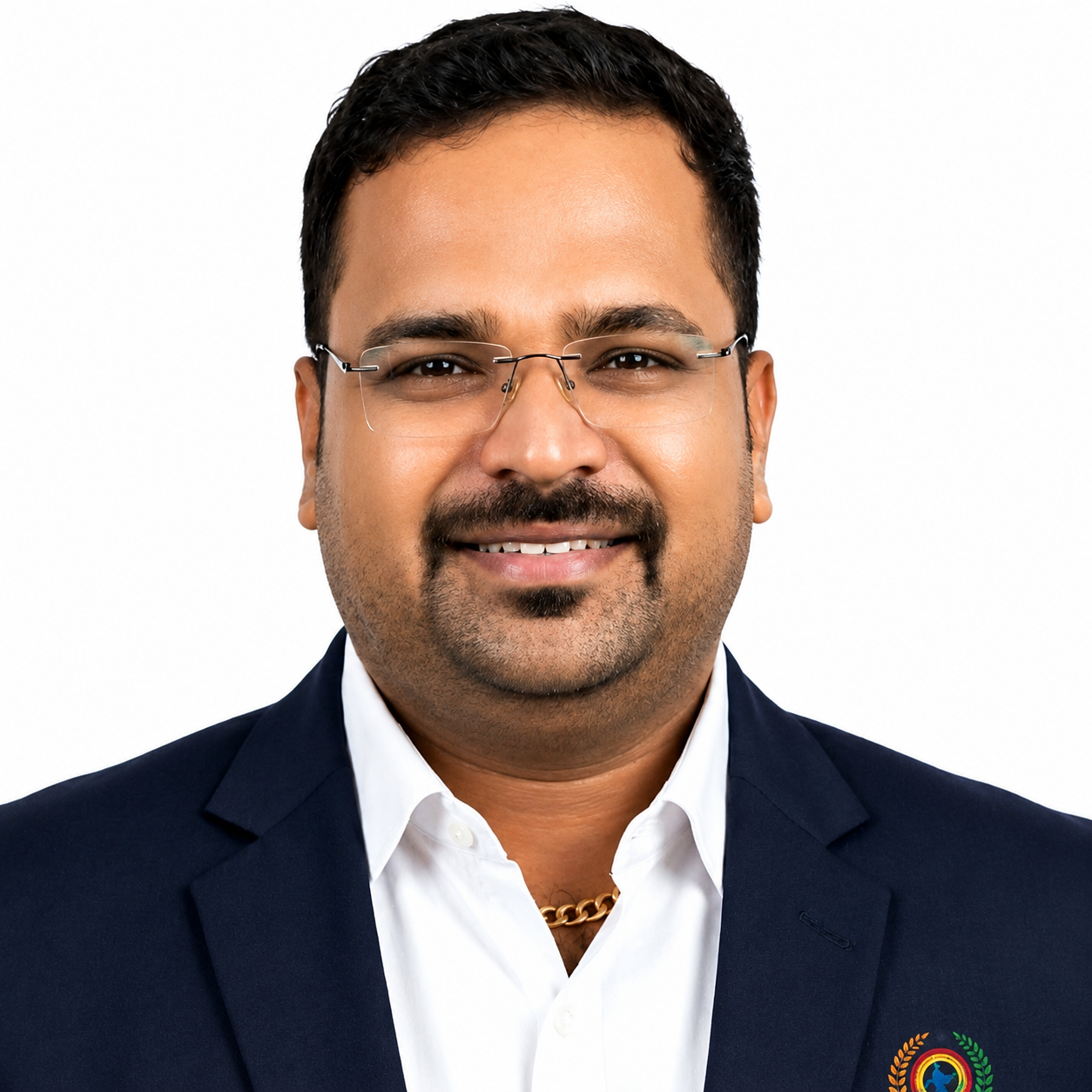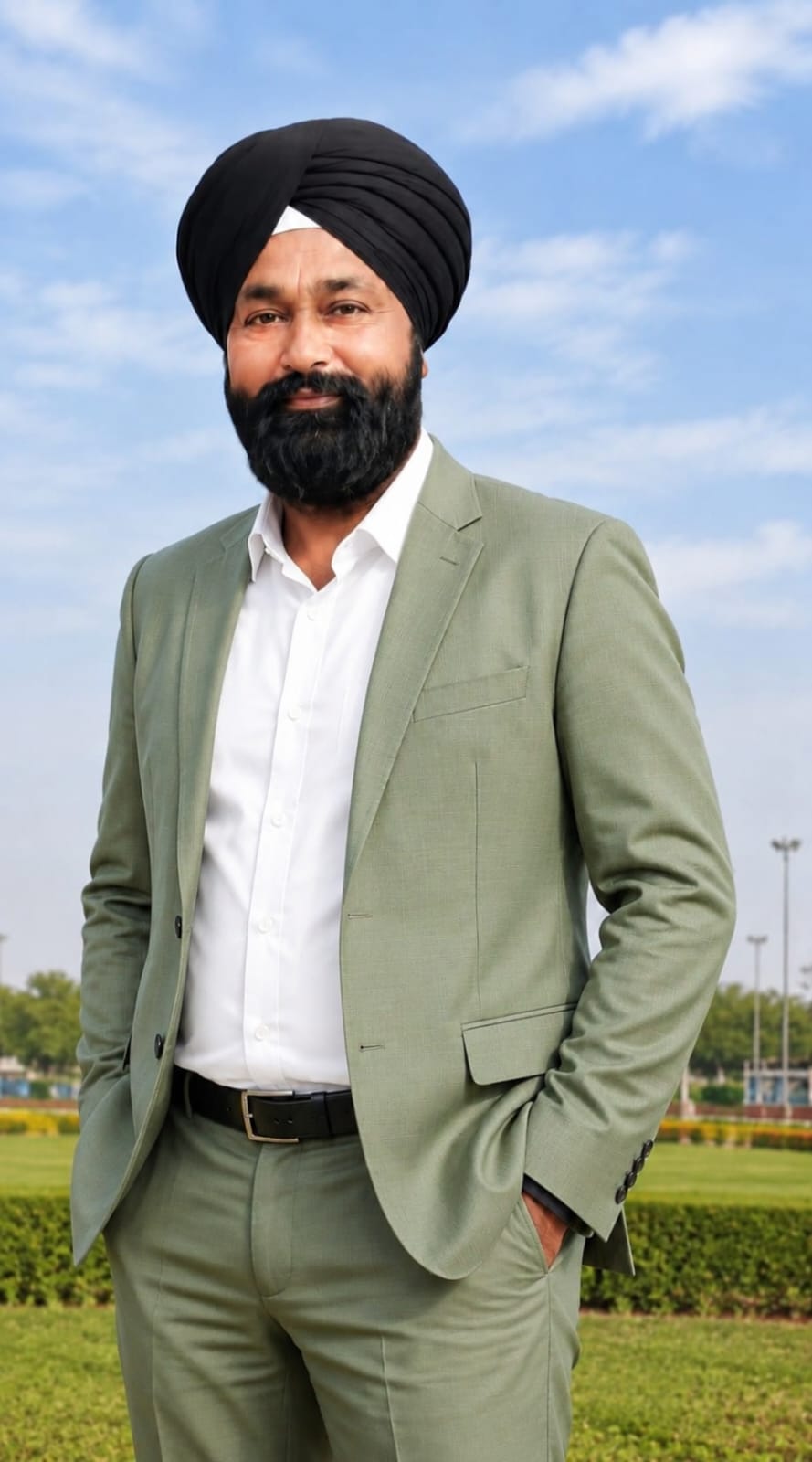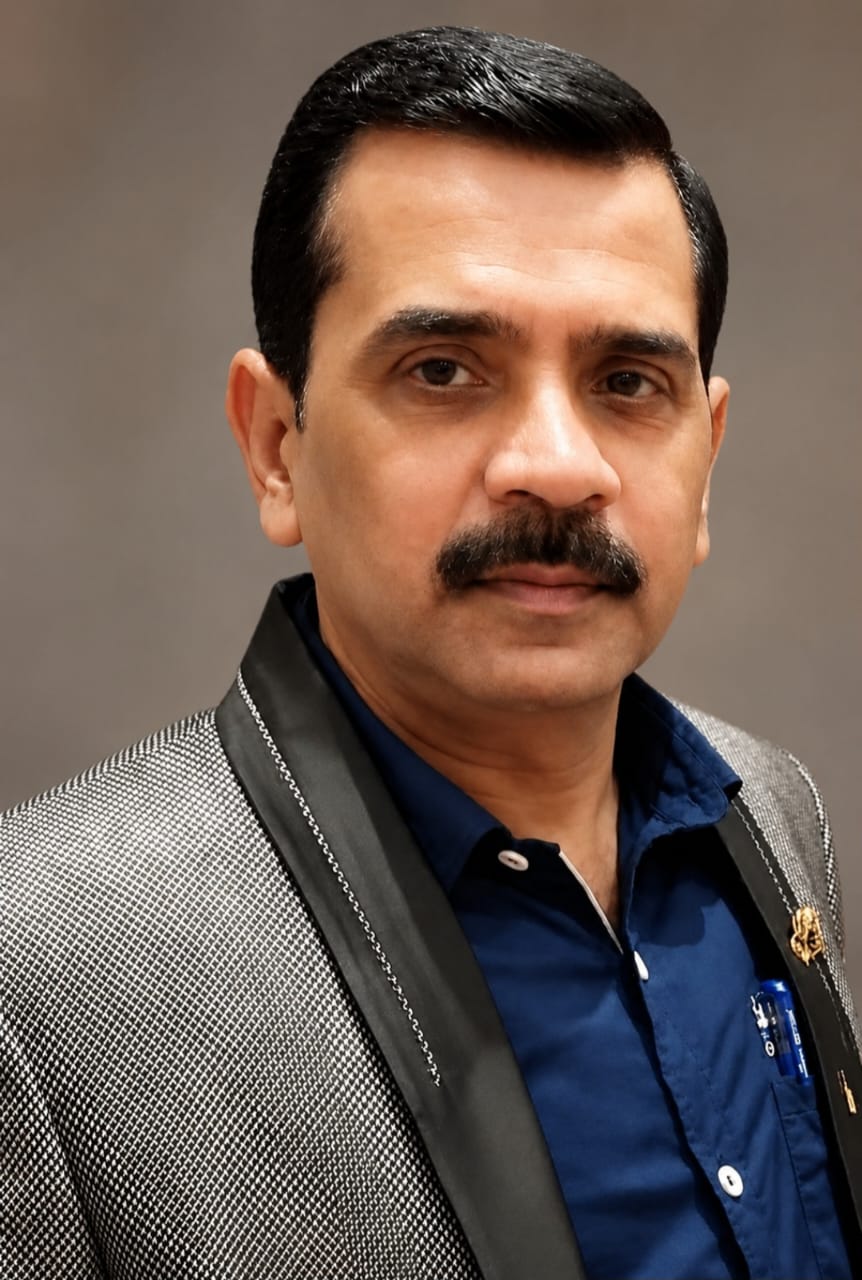
Dr. Sharad Kumar Shankhdhar
Early Life, Education, and the Making of a Journalist
A Life Dedicated to Truth, Literature, and Public Service
Introduction
In every generation, there are a few journalists whose careers extend far beyond the boundaries of newspapers and newsrooms. Their work not only documents history but also shapes public opinion, strengthens democratic values, and preserves the voice of society for future generations. Dr. Sharad Kumar Shankhdhar belongs to this distinguished category of Indian journalists whose professional journey, spanning over four decades, represents an extraordinary blend of editorial excellence, literary creativity, ethical leadership, and unwavering commitment to public service.
Recognized as a veteran journalist, editor, author, and media strategist, Dr. Shankhdhar has devoted nearly forty years to Hindi journalism, serving some of India's most respected newspapers and media organizations. His career reflects not merely professional longevity but a continuous pursuit of excellence, adaptability, and integrity during one of the most transformative periods in the history of Indian media.
From the era of typewriters and traditional print journalism to the age of digital news platforms and real-time reporting, he has witnessed—and actively contributed to—the remarkable evolution of Indian journalism. Throughout this journey, he has remained steadfast in his belief that journalism is not simply a profession but a social responsibility founded upon truth, accountability, and public trust.
Equally accomplished as a literary personality, Dr. Shankhdhar has enriched Hindi literature through poetry and fiction while inspiring younger generations of journalists and writers. His published literary works, editorial leadership, and contributions to digital media have earned him widespread recognition from professional institutions, literary organizations, and academic bodies, including an Honorary Doctorate awarded in recognition of his lifelong service to journalism and literature.
Today, his name represents experience, credibility, and dedication—qualities that have become increasingly valuable in the rapidly changing landscape of modern journalism.
Early Life and Family Background
Dr. Sharad Kumar Shankhdhar was born on 21 October 1968 in India during a period when the country was experiencing rapid political, social, and educational transformation. Growing up in an environment where education, discipline, and cultural values were deeply respected, he developed an early appreciation for literature, language, and social awareness.
Although the available records provide limited details about his family background, his later achievements clearly indicate that he was nurtured in an atmosphere that encouraged intellectual curiosity, perseverance, and public responsibility. These formative influences played a significant role in shaping his worldview and ultimately inspired him to pursue a profession dedicated to informing society.
His childhood coincided with a time when newspapers served as the principal source of reliable information for millions of Indians. Long before the arrival of television news channels, smartphones, or social media, newspapers carried immense influence in shaping public discourse. Observing the impact of journalism during these years left a lasting impression on the young Sharad Kumar Shankhdhar and gradually awakened his interest in communication, current affairs, and public life.
Even as a student, he demonstrated a natural inclination toward reading, writing, and analytical thinking. Rather than limiting himself to textbooks, he explored literature, newspapers, editorials, and contemporary social issues. These habits not only broadened his intellectual horizon but also laid the foundation for a career that would eventually span more than four decades.
Education
Education provided the intellectual framework upon which Dr. Shankhdhar built his distinguished career. Recognizing the immense power of language in influencing society, he pursued higher education in Hindi and successfully earned a Master of Arts (M.A.) in Hindi.
His academic specialization strengthened his command over the Hindi language, classical literature, modern literary criticism, and effective communication. The rigorous study of Hindi not only refined his writing skills but also cultivated a deep appreciation for India's literary heritage.
More importantly, his university education developed qualities that would become defining characteristics of his professional life—critical thinking, intellectual discipline, balanced judgment, and an ability to express complex ideas with clarity and precision.
Unlike many journalists who enter the profession solely through practical experience, Dr. Shankhdhar combined academic scholarship with field reporting. This unique combination enabled him to approach journalism with both intellectual depth and practical wisdom, allowing him to write not merely as a reporter but as a thoughtful interpreter of social realities.
His educational background later proved equally valuable in his parallel career as a literary writer, where his understanding of language and human emotions enriched his poetry and fiction.
Choosing Journalism as a Life Mission
For many professionals, a career is simply a means of earning a livelihood. For Dr. Sharad Kumar Shankhdhar, journalism gradually became a lifelong mission dedicated to serving society through truthful reporting and responsible communication.
The late 1980s marked an important period in Indian journalism. Print media remained the most influential platform for disseminating information, and newspapers were regarded as powerful institutions of public accountability. Journalists were expected to investigate facts rigorously, uphold ethical standards, and provide balanced reporting despite political and social pressures.
It was within this demanding professional environment that Dr. Shankhdhar decided to dedicate his life to journalism.
His decision reflected not only professional ambition but also a strong belief that accurate information could strengthen democracy, promote transparency, and empower ordinary citizens. Rather than seeking popularity or personal recognition, he focused on developing the skills, discipline, and credibility necessary to become a trustworthy journalist.
This commitment to ethical journalism would remain constant throughout every stage of his career.
The Beginning of a Professional Journey
Dr. Shankhdhar formally entered professional journalism in 1989, beginning a remarkable career that would eventually extend beyond four decades.
His first major assignment was with Veer Arjun, where he worked between 1989 and 1991 across Uttar Pradesh and Delhi. This period represented the foundation of his professional development and introduced him to the demanding realities of newspaper journalism.
Working in a newsroom during this era required far more than writing articles. Journalists were expected to gather facts personally, verify information through reliable sources, travel extensively, meet public officials, understand local communities, and often work under intense deadlines.
These formative years taught him the importance of accuracy, patience, and professional discipline.
At Veer Arjun, he learned that journalism is ultimately built upon credibility. A journalist's reputation depends not on sensational headlines but on consistent accuracy, fairness, and public confidence.
The experience also exposed him to India's diverse political and social landscape, helping him understand the complexities of governance, administration, and grassroots issues that would later become central themes throughout his editorial career.
Developing Professional Confidence
The early years of reporting proved invaluable in transforming an enthusiastic young graduate into a confident media professional.
Instead of remaining confined to desk work, Dr. Shankhdhar actively immersed himself in field reporting, editorial discussions, and newsroom operations. Every assignment presented an opportunity to strengthen his understanding of public affairs, sharpen his writing style, and develop stronger editorial judgment.
He gradually became known for his disciplined work ethic, careful verification of facts, and balanced presentation of news.
His colleagues recognized his ability to remain calm under pressure, meet strict publication deadlines, and handle complex stories with professionalism.
These qualities not only accelerated his personal growth but also prepared him for increasingly responsible editorial positions in the years ahead.
Expanding Professional Horizons
Following his early experience with Veer Arjun, Dr. Shankhdhar continued expanding his professional horizons by joining Dainik Lokmat in 1993, where he worked in Nagpur, Maharashtra.
This transition marked an important turning point in his career.
Working outside North India exposed him to new cultural environments, regional perspectives, and different editorial traditions. It broadened his understanding of India's linguistic and social diversity while strengthening his ability to work across varied journalistic settings.
Rather than limiting himself to one geographic region or editorial culture, he embraced new opportunities that enriched his professional experience.
These early career transitions would later enable him to successfully lead editorial teams across multiple Indian states, adapting to diverse readerships while maintaining consistently high journalistic standards.
A Journalist in the Making
By the early 1990s, it had become increasingly evident that Dr. Sharad Kumar Shankhdhar possessed qualities that extended well beyond routine reporting.
He had developed a reputation for disciplined journalism, intellectual maturity, and editorial responsibility. More importantly, he had begun building the professional credibility that would later open opportunities with some of India's leading newspaper organizations.
Although national recognition still lay ahead, the foundations of an exceptional career had already been firmly established.
His early years demonstrated that success in journalism is never achieved through shortcuts or publicity. Instead, it is earned through years of dedication, continuous learning, ethical conduct, and unwavering commitment to truth.
These principles would remain the defining characteristics of Dr. Shankhdhar's professional life for the next four decades, ultimately making him one of the respected names in Hindi journalism.
DR. SHARAD KUMAR SHANKHDHAR
Part II – Rise as an Editor, National Journalism, and Professional Excellence
Building a Legacy Across India's Leading Media Institutions
Expanding Horizons in Indian Journalism
After laying a strong professional foundation during the early years of his career, Dr. Sharad Kumar Shankhdhar entered a phase of remarkable growth that transformed him from a promising journalist into one of the most respected editorial professionals in Hindi media. The years that followed were characterized by continuous learning, geographical diversity, editorial leadership, and an unwavering commitment to journalistic ethics.
Unlike many journalists who spend their entire careers within a single organization, Dr. Shankhdhar deliberately embraced opportunities that exposed him to different newsroom cultures, editorial philosophies, and regional perspectives. Every institution he joined added a new dimension to his professional expertise, making him not only a skilled reporter but also an accomplished editor, administrator, and newsroom leader.
His career evolved alongside the rapid transformation of Indian journalism itself—from the traditional era of print newspapers to the age of satellite television and eventually digital media. Throughout these changes, one principle remained constant: journalism must serve society through truth, fairness, and responsibility.
Strengthening Editorial Experience with Dainik Lokmat
In 1993, Dr. Shankhdhar joined Dainik Lokmat in Nagpur, Maharashtra, marking his first major professional assignment outside North India.
Working in Maharashtra broadened his understanding of India's linguistic and cultural diversity. It introduced him to different newsroom practices and editorial systems while allowing him to interact with journalists from varied backgrounds.
The experience also strengthened his ability to understand regional issues beyond the Hindi heartland. Reporting in a culturally diverse environment taught him that although languages and traditions may differ, the core responsibility of journalism remains universal—to inform society with honesty and integrity.
This period significantly enhanced his adaptability and prepared him for future leadership positions that would require managing diverse editorial teams across multiple states.
The Swatantra Bharat Years
Following his tenure in Nagpur, Dr. Shankhdhar joined Swatantra Bharat in Lucknow during 1996–1997.
Lucknow, as the political and administrative capital of Uttar Pradesh, provided an entirely different journalistic environment. Here, reporting demanded a deep understanding of governance, legislative affairs, public administration, and state politics.
Working in the capital exposed him to high-level political developments, government institutions, policy decisions, and administrative systems. These experiences significantly strengthened his analytical abilities and helped him develop the balanced editorial judgment that would later distinguish his leadership.
During this period, he became increasingly recognized for his calm professionalism, meticulous attention to facts, and ability to present complex issues with clarity and objectivity.
A Defining Chapter – Amar Ujala
Perhaps the most significant chapter of Dr. Shankhdhar's professional journey began with his long association with Amar Ujala, one of India's most influential Hindi newspapers.
From 1998 to 2013, he served the organization across several states, including Uttar Pradesh, Uttarakhand, Jammu & Kashmir, Haryana, and Himachal Pradesh.
This extended tenure represented much more than long-term employment; it became the period during which he matured into one of the leading editorial professionals in Hindi journalism.
Working across multiple states required far more than editorial expertise. Every region possessed its own political dynamics, cultural traditions, administrative challenges, and readership expectations. Successfully adapting to these diverse environments demanded exceptional leadership, communication skills, and professional maturity.
Throughout these years, Dr. Shankhdhar consistently demonstrated an ability to maintain high editorial standards while responding effectively to local realities.
His work contributed not only to the quality of the newspaper but also to strengthening public confidence in responsible journalism.
Editorial Leadership and Management
As his experience expanded, so did his responsibilities.
Over the course of his career, Dr. Shankhdhar held several prestigious editorial positions, including:
-
Local Editor
-
Deputy Editor
-
Senior Deputy Editor
-
Chief Deputy Editor
-
Bureau In-charge
-
Special Correspondent
-
Special Political Correspondent
-
Editor-in-Chief
Each role required a unique combination of editorial vision, administrative efficiency, and leadership.
Managing a newsroom involves far more than editing articles. An editor must coordinate reporters, verify sensitive information, uphold ethical standards, mentor young journalists, resolve editorial conflicts, maintain publication quality, and make critical decisions under strict deadlines.
Dr. Shankhdhar became known for his disciplined approach to newsroom management and his unwavering commitment to factual accuracy.
His colleagues appreciated his ability to remain composed under pressure while ensuring that journalistic integrity was never compromised.
Association with Leading National Newspapers
Throughout his distinguished career, Dr. Shankhdhar contributed to numerous prestigious newspapers and media organizations, including:
-
Veer Arjun
-
Dainik Lokmat
-
Swatantra Bharat
-
Amar Ujala
-
Dainik Jagran
-
Sandhya Times (Times of India Group)
-
Hindi Weekly Chauthi Duniya
-
Hindustan Samachar Feature Service
-
Canviz Times
-
Dainik Bhaskar
-
Dainik Janmorcha (Bareilly)
-
Bareilly Ki Awaaz
Working with such a diverse range of institutions provided him with a comprehensive understanding of India's media ecosystem.
Each organization possessed its own editorial philosophy, readership profile, and operational style. Successfully contributing to all of them required exceptional adaptability, professionalism, and intellectual versatility.
Very few journalists are able to build distinguished careers across so many respected media houses while maintaining consistent credibility.
Journalism Across Five States and Twenty Districts
One of the defining features of Dr. Shankhdhar's career has been its extraordinary geographical diversity.
Over four decades, he worked in five Indian states and more than twenty districts, serving in various editorial capacities.
This extensive field experience provided him with an exceptional understanding of India's social fabric.
He witnessed firsthand the aspirations of rural communities, the challenges of urban development, the complexities of governance, and the cultural diversity that defines the nation.
Rather than viewing journalism solely through the lens of metropolitan newsrooms, he developed a people-centric perspective rooted in grassroots realities.
This broad exposure enriched both his editorial writing and his leadership philosophy.
A Journalist During India's Media Transformation
Few journalists have experienced the complete technological transformation of Indian journalism as comprehensively as Dr. Shankhdhar.
He began his career when newspapers were prepared using traditional production methods, long before the arrival of internet-based publishing.
During his professional lifetime, journalism underwent several revolutionary changes:
-
Manual newsroom operations
-
Computerized newspaper production
-
Satellite news broadcasting
-
Online journalism
-
Social media reporting
-
Mobile-first digital publishing
Rather than resisting change, Dr. Shankhdhar embraced every technological advancement while preserving the ethical principles that define responsible journalism.
He understood that technology could transform the speed of communication, but credibility would always remain journalism's greatest strength.
Leadership Beyond Print Journalism
As Indian media entered the digital age, Dr. Shankhdhar once again demonstrated remarkable adaptability.
Instead of limiting himself to traditional newspapers, he expanded his vision into digital journalism, recognizing that the future of news would increasingly depend upon online platforms.
His transition into digital media reflected not only professional foresight but also a willingness to continuously learn and evolve.
This adaptability enabled him to remain relevant across four decades of unprecedented technological change.
Editor-in-Chief of SKS24NEWS Channel
Continuing his commitment to responsible journalism, Dr. Shankhdhar assumed the role of Editor-in-Chief of SKS24NEWS Channel, a digital news platform dedicated to credible reporting and public awareness.
Under his editorial leadership, the platform has sought to combine the speed of digital media with the accuracy and responsibility traditionally associated with established newspapers.
His leadership philosophy emphasizes fact-based reporting, editorial independence, and service to society rather than sensationalism.
Through this platform, he has continued mentoring journalists while promoting ethical standards in the rapidly evolving world of digital news.
A Reputation Built on Integrity
Professional success in journalism cannot be measured solely by positions held or organizations served.
Its true measure lies in credibility.
Over four decades, Dr. Sharad Kumar Shankhdhar earned the respect of colleagues, readers, public institutions, and media professionals through consistent honesty, disciplined work, and editorial responsibility.
His career demonstrates that genuine journalism is founded not upon popularity but upon public trust.
This reputation eventually became the cornerstone of the many honours, recognitions, and leadership responsibilities that would follow in the later years of his career.
DR. SHARAD KUMAR SHANKHDHAR
Part III – Literary Contributions, Honours, Leadership, Legacy, and Continuing Mission
A Lifetime Dedicated to Journalism, Literature, and Nation Building
A Parallel Journey in Literature
While journalism became the defining profession of Dr. Sharad Kumar Shankhdhar, literature remained the soul of his intellectual life. Throughout his four-decade career in newspapers and media organizations, he continued to nurture his passion for creative writing, proving that journalism and literature are not separate disciplines but complementary expressions of human thought.
His literary writings reflect the same values that have guided his journalistic career—truth, sensitivity, social awareness, and respect for human dignity. Unlike routine reporting, literature allowed him to explore emotions, relationships, morality, and the changing realities of Indian society with greater depth and artistic freedom.
Over the years, his poems and stories have appeared in numerous regional and national newspapers, magazines, and literary publications, earning appreciation from readers as well as literary circles. His writing is characterized by simplicity of language, emotional depth, and a realistic portrayal of everyday life, making it accessible to a wide readership while retaining literary richness.
Published Literary Works
Dr. Shankhdhar's contribution to Hindi literature extends beyond journalism through the publication of several literary works.
Among his published books are:
-
Os Ki Boond – A collection of Hindi poetry that reflects human emotions, nature, hope, and the experiences of everyday life.
-
Swabhimaan – A collection of short stories exploring self-respect, social values, and human relationships.
-
Tabadla – Another literary work that continues his engagement with contemporary social themes.
These publications demonstrate that his literary vision extends far beyond news reporting. His creative works reveal an author deeply connected with society, capable of expressing both individual emotions and broader social concerns.
His literary career has progressed alongside his journalistic journey, allowing him to contribute meaningfully to both Hindi journalism and Hindi literature for nearly forty years.
Recognition for Excellence
Long and distinguished careers are measured not only by professional achievements but also by the respect they earn from peers, institutions, and society.
Over the years, Dr. Sharad Kumar Shankhdhar has received numerous prestigious awards recognizing his contribution to journalism, literature, and public communication.
Among the major honours conferred upon him are:
-
Ganesh Shankar Vidyarthi Award
-
Premchand Sahitya Puraskar
-
Kaka Kalelkar Award
-
Kabir Award
-
Tulsi Award
In addition to these distinguished recognitions, he has been honoured by numerous regional and national organizations for his outstanding contribution to journalism, literature, and editorial leadership. These awards reflect not merely professional success but also the trust and admiration he has earned through decades of dedicated public service.
Honorary Doctorate and International Recognition
One of the most significant milestones in Dr. Shankhdhar's distinguished career came after completing forty years of dedicated service to Hindi journalism and literature.
In recognition of his lifelong contribution, Cedarbrook University (USA) honoured him with an Honorary Doctor of Philosophy (Ph.D.) and a Gold Medal. This prestigious recognition acknowledged not only his journalistic excellence but also his enduring contribution to Hindi language, literature, and ethical public communication.
The honour represented international appreciation of a career devoted to truth, responsible journalism, and literary excellence.
Following this achievement, approximately forty-two organizations representing diverse sections of society—including educational institutions, social organizations, medical professionals, advocates, business communities, and other public bodies—extended their congratulations and honoured him for bringing distinction to the region through his achievements.
Such widespread recognition illustrates the respect he commands far beyond the media fraternity.
Recognition for Innovation in Digital Journalism
The rapid evolution of digital technology has transformed journalism across the world. Many experienced print journalists found it difficult to adapt to this changing environment.
Dr. Sharad Kumar Shankhdhar, however, embraced technological transformation while preserving the ethical values that had defined his entire career.
His successful contribution to digital journalism in Uttar Pradesh earned him special recognition.
For his innovative work in digital media, he was honoured at a grand ceremony in Delhi by film actress Ameesha Patel, acknowledging his pioneering efforts in expanding responsible journalism into the digital era.
This recognition symbolized his ability to bridge two generations of journalism—traditional print media and modern digital communication.
Leadership Beyond the Newsroom
Throughout his professional journey, Dr. Shankhdhar has believed that journalism extends beyond newspapers and television studios.
True journalism also requires building institutions, mentoring younger professionals, and strengthening democratic dialogue within society.
This philosophy is reflected in his continued leadership responsibilities.
He currently serves as:
-
Editor-in-Chief, SKS24NEWS Channel
-
Correspondent, Amar Ujala
-
District President, Badaun Press Club
-
Provincial Executive Member, Uttar Pradesh Shramjeevi Patrakar Union
Through these positions, he has continued working not only as a journalist but also as an organizer, mentor, and advocate for ethical journalism.
Mentoring the Next Generation
One of the lesser-known yet significant aspects of Dr. Shankhdhar's career has been his role in encouraging young journalists.
Having witnessed the evolution of Indian journalism over four decades, he understands the importance of professional discipline, factual reporting, editorial independence, and public accountability.
His experience enables younger professionals to learn not only technical skills but also the ethical responsibilities that accompany journalism.
He has consistently emphasized that journalism is fundamentally a public service rather than merely a commercial enterprise.
This belief continues to influence those who have worked alongside him.
Personal Philosophy
At the heart of Dr. Sharad Kumar Shankhdhar's professional life lies a simple yet profound philosophy:
Journalism exists to serve society.
Throughout changing governments, evolving technologies, and rapidly transforming media landscapes, he has remained committed to the principles of truthfulness, impartiality, credibility, and responsible communication.
He believes that a journalist's greatest strength is public trust—a value that cannot be purchased or manufactured but must be earned through years of honest work.
Similarly, as a literary writer, he views literature as a means of preserving human values, encouraging reflection, and strengthening cultural identity.
This balance between professional discipline and creative expression has defined every stage of his remarkable journey.
Legacy and Lasting Impact
Dr. Sharad Kumar Shankhdhar's career represents more than four decades of professional achievement; it represents a lifetime devoted to strengthening Hindi journalism and enriching Indian literature.
His contribution may be understood through several enduring dimensions:
-
Four decades of uninterrupted journalistic service.
-
Editorial leadership across India's leading newspapers.
-
Journalism spanning five states and more than twenty districts.
-
Contributions to Hindi literature through poetry and fiction.
-
Successful transition from print journalism to digital media.
-
Leadership in professional journalistic organizations.
-
Mentorship of emerging journalists.
-
National and international recognition for public service.
These accomplishments collectively form a legacy that extends well beyond personal success.
They reflect a life dedicated to protecting the integrity of journalism while promoting the enduring value of literature.
Conclusion
The life of Dr. Sharad Kumar Shankhdhar demonstrates that genuine success is measured not merely by positions held or awards received, but by the positive influence one leaves upon society.
From a young journalist beginning his career in the late 1980s to becoming an internationally honoured editor, author, and media leader, his journey stands as a remarkable example of perseverance, integrity, intellectual growth, and public service.
His career has unfolded alongside the transformation of Indian journalism—from traditional print newspapers to the dynamic digital era—yet the values guiding his work have remained unchanged. Truth, responsibility, fairness, and respect for society continue to define his professional identity.
As an editor, he has shaped newsrooms; as a writer, he has enriched Hindi literature; as a mentor, he has inspired future journalists; and as a public intellectual, he has contributed to strengthening democratic discourse.
Today, Dr. Sharad Kumar Shankhdhar is recognized not only as a veteran journalist but also as a respected literary figure, media leader, and custodian of ethical journalism. His enduring legacy serves as an inspiration for journalists, writers, students, and media professionals across India, affirming that dedication to truth and service to society remain the highest ideals of the profession.